Comparative lead-in
The distinction between a consumer slate and a purpose-built industrial device is not mere marketing; it is physics and engineering writ large. When a production line, an offshore platform, or a roadside kiosk demands continuous operation under sun, salt spray, vibration, and grime, the specification sheet for an industrial panel pc speaks to disciplines absent from consumer design: ingress protection, sustained luminance, and thermal management by design. This comparative essay will show how optical bonding, 1000‑nit LCD brightness, and IP66-rated enclosures alter failure modes fundamentally.
Thermal behaviour and optical bonding
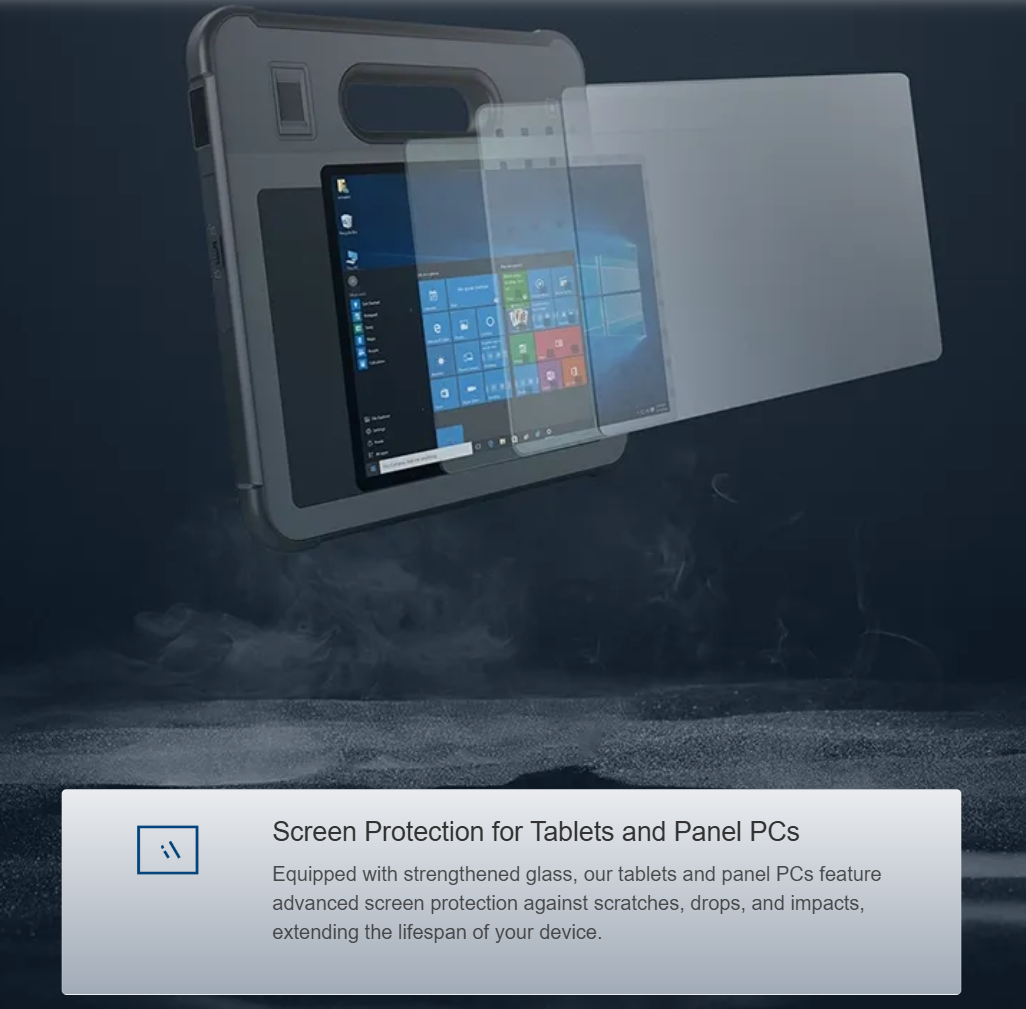
Consumer tablets rely upon thin enclosures and passive convection; they accept thermal throttling as a trade-off for thinness. Industrial displays, by contrast, employ optical bonding to eliminate air gaps between the LCD and cover glass. The result is not only improved sunlight readability but also altered heat transfer paths. Optical bonding increases conductive paths across the stack, which reduces hot spots and allows heat sinks and chassis to draw heat away more uniformly. Thus, thermal throttling becomes a design exception rather than an expected occurrence.
Ingress protection and mechanical endurance
IP66 signifies protection against powerful water jets and complete dust ingress prevention — a specification common on factory floors and maritime installations such as North Sea platforms. Consumer devices lack sealed connectors and gasketing; they are ill-suited to hostile environments. Industrial designs incorporate sealed I/O, conformal coatings on PCBs, and reinforced mounting points. These measures protect the touch controller and internal electronics during spray cleaning or deliberate washdown procedures.
Optical performance in real scenes
Brightness alone is insufficient; contrast retention under ambient light and touch responsiveness at angle and with gloves matter equally. A 1000‑nit LCD coupled with optical bonding reduces internal reflections and preserves contrast when sunlight strikes the bezel. The touch stack in an industrial device is calibrated for capacitive response through thicker cover glass or when operators wear gloves — a frequent operational requirement. Small decisions in glass thickness, adhesive index matching, and touch firmware create practical differences in uptime and user satisfaction.
Common procurement mistakes and sensible alternatives
Supply teams often prioritize headline cost and CPU benchmarks while overlooking IP rating, thermal design power, and repairability. The predictable result: devices that fail after seasonal temperature swings or during routine washdowns. A sensible procurement path switches the calculus to total cost of ownership — maintenance intervals, mean time between failures, and field serviceability. Consider also the ecosystem: accessories, mounting options, and compliance records. For many deployments, a properly specified range of industrial panel pcs will outpace three low-cost consumer replacements by virtue of longer service life and reduced downtime.
Deployment lessons from the field
Experienced engineers in manufacturing plants and outdoor telecom sites emphasise three constants: secure thermal coupling to chassis, avoidance of air gaps, and durable sealing. These lessons are visible in military and maritime procurement, and in standards such as IP66 and MIL‑STD‑810 influents. — The practical upshot is predictable: a device that accounts for heat path, ingress, and optical performance lasts longer and requires fewer emergency swaps.
Advisory: three golden rules for selection
1) Prioritise ingress and sealing: insist on IP66 or better where water, dust, or washdown are present; connectors and vents must be rated equally. 2) Demand optical bonding and sufficient luminance: 800–1000 nits with bonded glass reduces reflective losses and extends readability outdoors. 3) Verify thermal design and serviceability: examine heat sinks, chassis conduction paths, and modular components to estimate realistic MTBF rather than peak CPU benchmarks.
The comparative truth is plain: consumer devices win on upfront cost; industrial devices win on mission continuity — and that continuity is the point of the exercise. Estone. –