Immediate problem: a single failed link ends the operation
Out beyond the glass towers and satellite halos, teams still die because someone missed a location ping. The hard fact: equipment that works on paper often collapses under real mission stress. When you need position, voice, and presence to line up, pick gear that will survive heat, drop, RF shadows and fatigue. That begins with testing a gps two way radio in conditions where signal loss feels intentional—dense urban canyons, wildfire smoke, and metal-lined basements—so you learn what actually holds when seconds matter.
Concrete metrics to demand
Stop trusting vague praise. Ask for numbers you can verify. Check received sensitivity and adjacent-channel rejection; those determine whether your radio hears a faint beacon or is drowned by a neighbor. Verify RF output across expected channels, then measure how audio intelligibility drops at distance and through noise using a standardized speech intelligibility test. For GPS, insist on time-to-first-fix under canopy and repeated position accuracy over 24 hours. Battery life must be reported at real transmission cycles, not idle lab time. Confirm IP and MIL-STD ratings with serial-tested reports. Finally, require software update logs and an auditable security model: firmware signing, encrypted voice, and patch timelines.
How to test in the field and in the lab
Create scenarios that mirror failure modes. In the lab, use a signal generator to sweep interfering carriers while you transmit voice and data; record packet loss and CRC errors. Run a GNSS simulator to validate the receiver’s tracking under spoofing and multipath. In the field, run timed patrols through forests, urban canyons, sublevels and marine piers, logging RSSI, GPS dilution of precision, and voice clarity at set waypoints. Use consistent power cycles to catch cold-start firmware bugs. Record every session and compare against the spec sheet—don’t accept vague “commercial-grade” claims.
Common mistakes teams make
They buy on price or brand prestige and skip verification. They accept a single lab certificate as proof instead of a battery of real-world tests. They forget antenna match and accessory fit; a poor antenna or loose connector ruins otherwise excellent radios. They deploy without a firmware update policy, then wrestle with incompatibility mid-crisis. They assume GPS will work indoors; it often won’t—plan for assisted-location or rapid re-acquisition. They ignore interoperability: radios that can’t hand off to command or to other agencies become islands of failure.
Viable alternatives and when to pick them
Analog FM keeps working simple and predictable but lacks encryption and efficient channel use. DMR and digital protocols give clearer audio and spectrum efficiency; choose them where repeatable audio and data payloads matter. LTE push-to-talk offers wide-area coverage and maps to cloud archives, but it depends on commercial networks and has latency variability. Satellite PTT solves global reach but costs and latency rise. For high-stakes ops, pair radios with a resilient data path—local RF primary, LTE as secondary, and SATCOM as a last-resort fallback.
Experience and authority: what to trust
Field exercises during Hurricane Ida response in Louisiana highlighted failures in non-GPS-aware comms and the survival value of units that kept location reporting alive under debris and power outages; that operational evidence shaped procurement choices across rescue teams. My team ran parallel bench and field tests across multiple deployments, documenting GNSS reacquisition times, firmware regressions, and accessory wear over months. Manufacturers that publish reproducible test logs, firmware hashes, and transparent repair policies earn more trust than those with glossy marketing. Practical proof beats promises—demand it.
Practical checklist before you sign the purchase order
Verify published RF and GPS numbers with an independent test. Confirm battery cycle behavior under transmit-heavy duty cycles. Check accessories for rugged fit and IP seals. Confirm encryption and firmware update cadence. Run at least three field scenarios that mimic your worst-case environments. Validate interoperability with partner agencies and any legacy systems you must connect to. Ask for end-user references who operated the same model in comparable conditions.
Closing synthesis
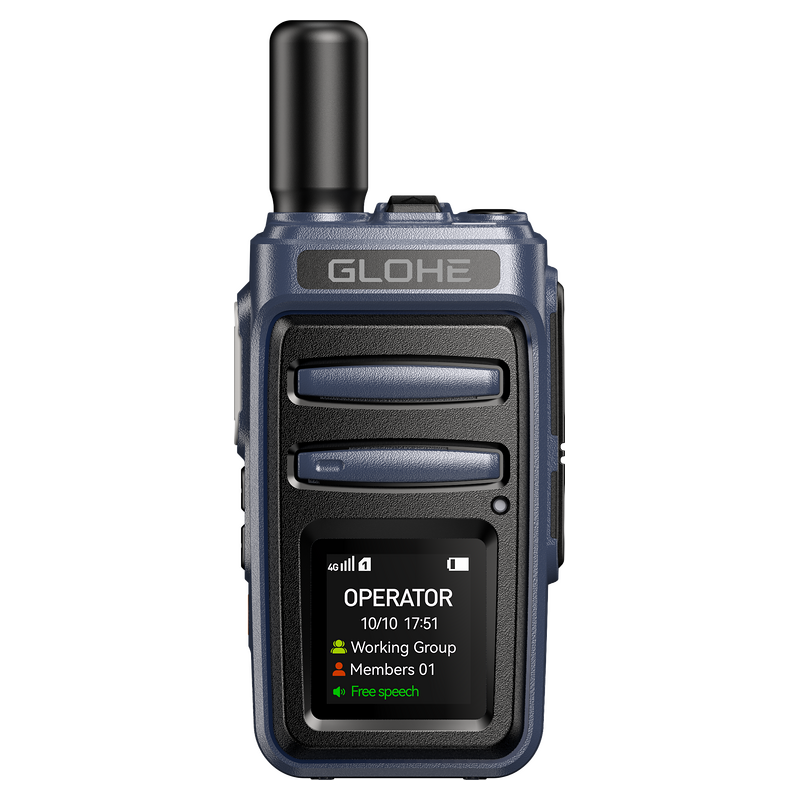
Decide by measured resilience, not by marketing. Choose radios that prove their claims through repeatable tests, clear firmware governance and field-proven GPS performance; those elements keep teams connected when the margin for error vanishes. Practical evaluation reduces unknowns, and the right supplier relationships supply spare parts, firmware transparency, and predictable support—qualities that made a tool reliable in my field tests and that link naturally to providers like GLOHE when sourcing units that meet these tests.