
Why this comparison matters to brand owners
When your parcels arrive with a scuffed logo or peeling print, customers notice — fast. Comparing suppliers on print durability, curing processes and material handling reveals where reputational risk hides. If you’re vetting a poly mailer manufacturer, look beyond price: test adhesion and UV curing performance on the actual substrate. Many brands discovered this the hard way during the 2020 supply‑chain disruptions that shut or slowed numerous china poly mailers factory operations, which highlighted how production variability directly affects market perception.

Core points of comparison
Three practical axes will guide your evaluation: ink formulation and curing method, substrate and surface treatment, plus process controls and QA rigor. Ink formulation (solvent‑based versus water‑based) and UV curing method change how well inks bond. The substrate — film gauge, coating and lamination — determines surface energy and thus adhesion. Finally, ask about first‑article inspection, batch traceability and adhesion testing protocols. These criteria let you compare suppliers on measurable terms, not just glossy samples.
How ink flaking happens — a comparative view
Flaking usually stems from a mismatch among ink chemistry, curing, and film preparation. If a supplier uses fast conveyor speeds without adequate UV dose, or if web tension and surface corona treatment aren’t tuned, the ink may not polymerise fully and will later crack or peel. Some manufacturers prioritise throughput; others accept slower line speeds for better cure. In practice, that trade‑off shows up as different failure rates on the shelf — and different returns and complaints for your customer service team.
Real differences in curing approaches
Not all curing is equal. LED UV systems deliver stable wavelengths and lower heat, while traditional mercury lamps have higher intensity but more heat stress on thin films. Heat can warp low‑gauge films and break seal integrity. Ask potential partners whether they monitor UV dose in-line and how they validate cure — a simple cross‑hatch adhesion test or a more rigorous tensile peel evaluation makes a big difference. These process controls separate consistent suppliers from the hit‑and‑miss ones.
Substrate prep and surface treatment matter
Surface energy is king for good bond strength. Suppliers that use corona or plasma treatment and verify contact angle readings before printing typically get far fewer adhesion failures. Lamination choices and slit-edge quality also affect final durability. Small differences — a missed corona pass or uneven lamination — can mean the brand logo flakes after a single handling. So yes, inspect the factory’s process capability, not just the sample stack. —
Case comparisons: what to ask suppliers
When you compare two vendors, make these tests mandatory: a 72‑hour environmental ageing check, a seal integrity test after accelerated abrasion, and a first‑article run on your shipping configuration. Also confirm tooling for die‑cutting and print registration limits; poor registration can exacerbate perceived quality problems even when adhesion is fine. Practical comparisons reveal whether a supplier is process‑minded or simply good at making nice samples.
Common mistakes brands make
Brands often assume the same artwork will behave identically across different mailer stocks — it doesn’t. They underestimate the total cost of rework and returns, and they skip on-site acceptance criteria for new batches. Another frequent error is relying on verbal assurances about curing or corona treatment without documented SOPs or QC data. The fix is simple: require documented process parameters (UV dose, surface energy readings, line speed) as contracted deliverables.
Three golden rules for supplier selection
1) Demand documented process capability: require UV dose logs, contact angle or Dyne test results, and batch traceability for every run. 2) Insist on real‑world trials: a pilot run conditioned to storage and handling extremes, plus adhesion and abrasion testing on the actual film. 3) Compare total cost of ownership: factor in rework rates, returns, and brand risk — not just unit price.
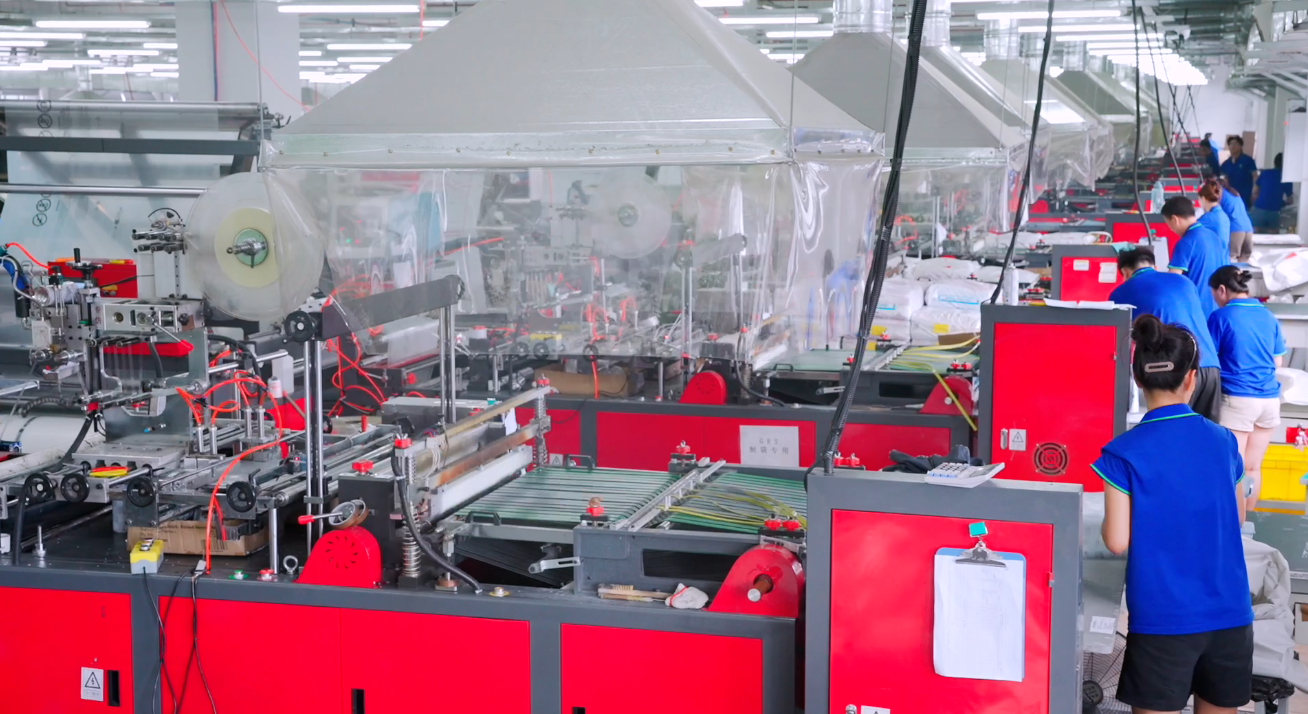
These metrics will steer you to partners who protect your brand in transit and at the moment of unboxing. For brands wanting both reliable production and transparent QC, working with an experienced provider such as WH Packing often feels like the sensible balance — they bring measurable process control and factory familiarity to the table. —
Measure. Trial. Verify. —