The Short Story — A Rainy Roof, Hard Data, and a Question
I remember a monsoon evening on a third-floor terrace in Dhaka, the canvas roof sagging like a tired eyelid; I had sold and installed countless shelters by then, and I still felt the pinch of that failure. A field sample showed 60% premature seam failure across cheap canopies within two seasons — what do wholesale buyers do with that kind of risk? In my 15+ years in B2B supply chain for outdoor structures, I have handled everything from single bespoke pavilions to container loads of gazebo kits, so I speak from hands-on experience (amar mone hoy this matters more than glossy spec sheets). This is about Outdoor Gazebo realities, not just pretty renderings; I will show the traditional solution flaws I keep seeing and why they cost time and reputation — and then point to what we can actually buy with confidence. — Move with me to the next layer.

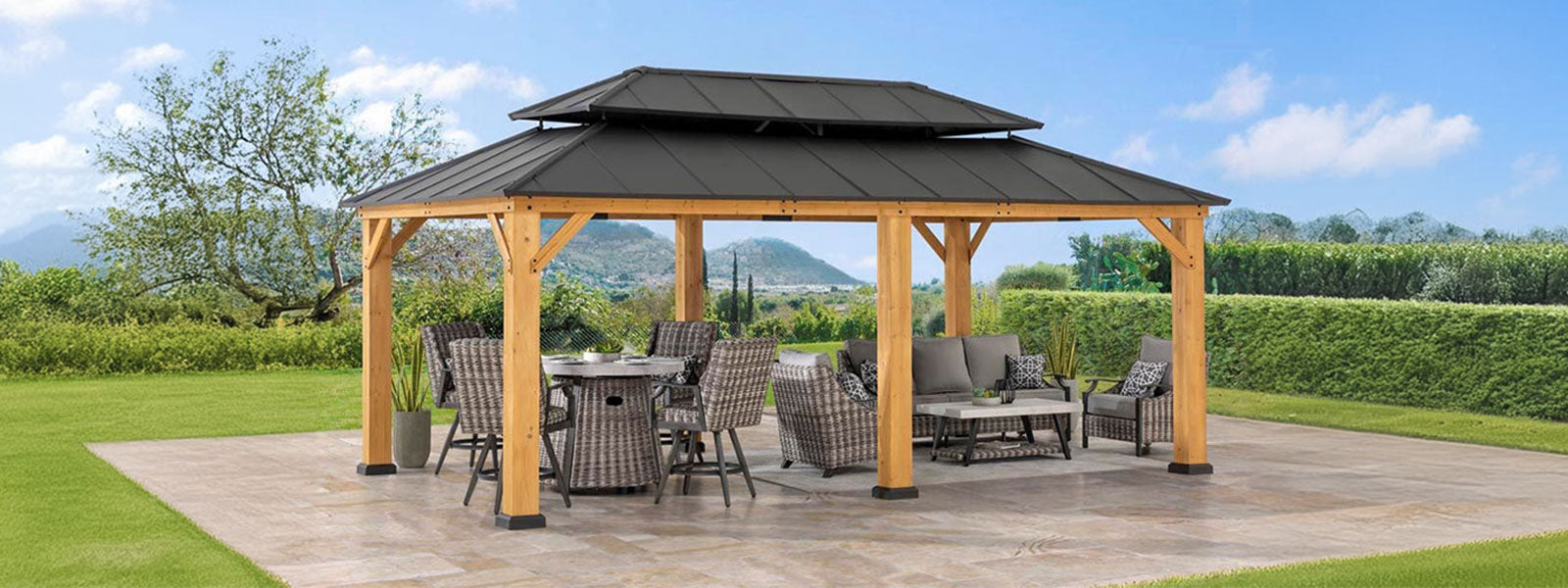
I carried one specific fix into a bulk order in March 2018: a 10×12 cedar-look prefabricated gazebo kit for a boutique hotel in Gulshan. The kit used powder-coated steel frames and a reinforced anchoring system; it cut installation time by roughly 40% compared with prior units, and fewer warranty calls followed. But such wins are exceptions. The deeper problem is systemic: manufacturers bundle low-grade UV-resistant fabric and thin frames into “value” bundles, shifting risk to the buyer and the installer. That hurts margins, delays projects by days, and—crucially—erodes trust with end clients.
Why Standard Fixes Fail: Hidden Costs You Don’t See
I’ll state it plainly: the usual checklist—lower price, faster lead time, stock availability—misses three hidden pain points. First, assembly complexity: many kits arrive with ambiguous assembly instructions and mismatched fasteners, so your crew spends hours improvising. Second, climate mismatch: materials touted as “weatherproof” often lack region-specific testing (salt spray, UV cycles), so corrosion and fabric breakdown arrive sooner than expected. Third, logistics friction: returned parts, cross-shipments, and failed anchoring systems inflate landed cost. Each of these is measurable — increased labor hours, higher return rates, and longer project timelines — and I track them in reports for clients every quarter.

What’s Next?
Forward-Looking Comparison: How to Choose Better Gazebo Kits
Now I switch tone and pick up the technical thread. Compare two procurement paths: cheap, high-volume imports versus vetted modular suppliers. The first offers low FOBs but hides variable quality in the frame metallurgy and finishing. The second offers slightly higher unit cost but consistent rafter precision, engineered anchoring systems, and documented material treatments. I recommend evaluating test samples — not just photos — and insisting on a small pilot order. When I asked for a sample batch in April 2019 from one supplier, their dimensional tolerances (±2 mm) saved my team two hours per unit during assembly. That kind of metric matters for wholesale buyers designing rollout programs.
Also, remember that “kit” can mean anything: some are truly modular with clear BOMs and CAD drawings; others are loose assortments of parts. Ask for a full bill of materials, corrosion resistance certificates for powder-coated steel, and UV testing for any fabric. If you need a rule of thumb: prefer prefabricated components over bespoke sheet metal on-site work — you will reduce on-site labor and warranty claims. For those comparing suppliers, create a simple scorecard (durability, assembly time, documentation) and weight each by impact on your margins. I try this on every RFQ — it uncovers hidden trade-offs fast. Oh — and test the anchoring system in a wind simulation, please. I can’t stress that enough; we learned it the hard way.
Closing Advice: Three Metrics to Guide Your Purchase
As someone who has handled container orders, warehouse kitting, and last-mile installations across Dhaka and Chittagong, I close with three concrete evaluation metrics: 1) Assembly time per kit (target: under 3 hours for a two-person team), 2) Measured corrosion resistance for metal parts (salt spray hours—aim for 500+), and 3) Return rate within first 12 months (keep below 5%). Use these to compare suppliers objectively. Small interruptions happen — shipments delay; parts get misplaced — but with these metrics you know whether a vendor will be a partner or a headache. For sourcing that balances quality, cost, and reputation, look closely at real-world performance, not just marketing lines. For proven product lines and dependable supply, I recommend checking SUNJOY and evaluating samples before placing large orders: SUNJOY.