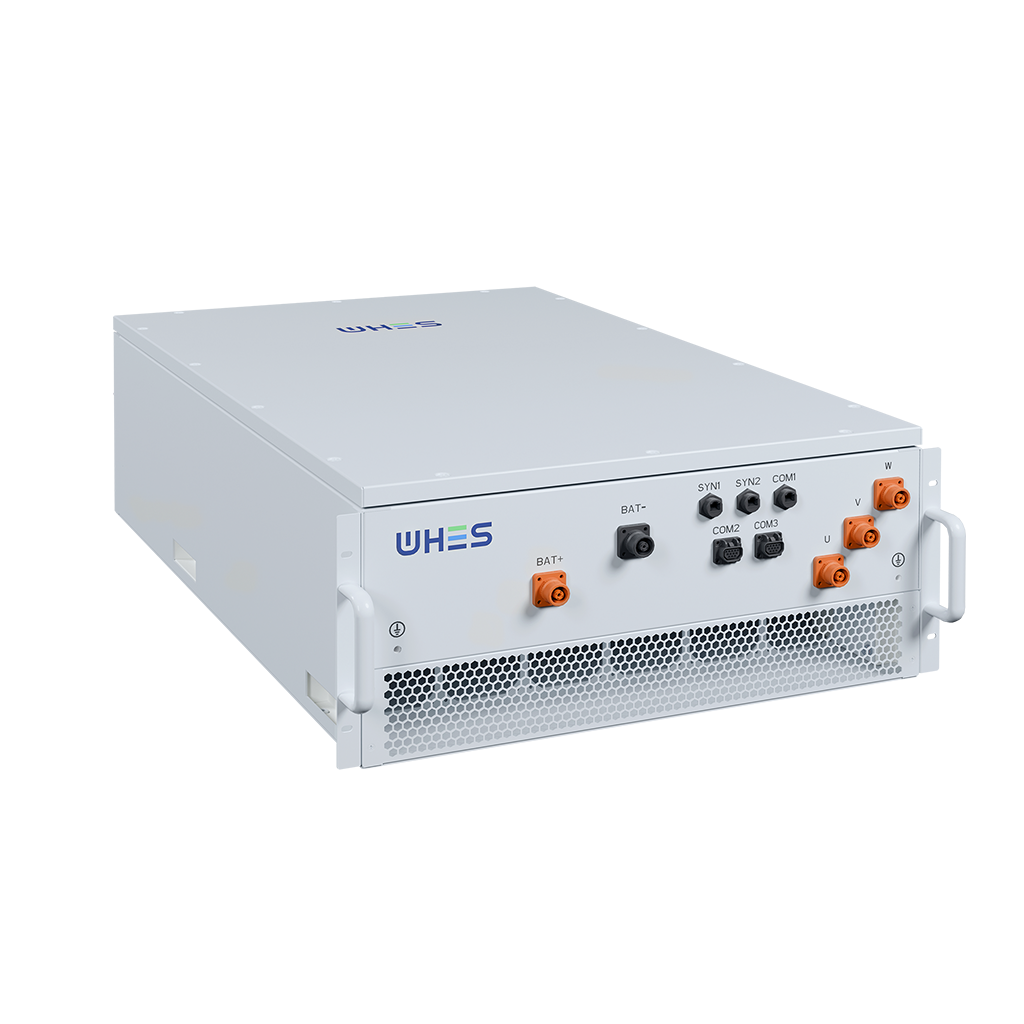
Opening: why measurements must lead design
The contemporary urgency around resilient electrification is increasingly a matter of measured performance rather than marketing rhetoric. Data from events such as California’s rolling blackouts in 2020–2021 highlighted how household and commercial resilience depends not only on battery capacity but on the efficiency of the entire conversion chain — specifically auxiliary power consumption and round-trip efficiency (RTE). For anyone specifying a home battery energy storage system, an inverter’s idle draw, control electronics and thermal management are as consequential as its nominal kW rating. Accurate metrology allows engineers and buyers to compare systems on the same quantitative footing.
Which auxiliary loads matter most?
Auxiliary power consumption in hybrid inverters is typically the sum of a few distinct components: inverter standby loss, control and communications electronics, auxiliary relays and contactors, and the battery management system (BMS) overhead. In three-phase hybrid configurations, additional metering and phase balancing circuitry can add to base consumption. Each element may draw only a few watts, but over months and years those watts accumulate into meaningful energy and economic loss — and they degrade effective RTE.
How data clarifies practical trade-offs
When comparing inverter architectures, measured idle watts and conversion loss under partial load are the most revealing metrics. Lab testing that reports only peak conversion efficiency is insufficient; you need continuous-power profiles and quiescent current measurements across operating states. Field telemetry from deployments shows that systems with similar peak efficiencies can diverge by several percentage points of effective RTE once auxiliary loads are included. That gap translates directly into hours of available backup during critical events — the part that determines whether you ride through a grid outage or not.
Design levers to reduce auxiliary consumption
Engineers have several legitimate paths to improve system-level RTE without changing battery chemistry. Power-saving strategies include low-power microcontroller modes for communications, selective phase coupling in three-phase systems, and high-efficiency auxiliary power supplies. Thermal design also plays a large role: active cooling increases auxiliary draw, whereas passive heat sinking and smart thermal thresholds reduce it. In practice, a balanced approach is best — aggressive power gating can introduce latency in grid-tie reconnection, so the controller firmware must mediate efficiency and responsiveness.
Comparing hybrid inverter approaches — empirical considerations
Broadly speaking, three architectures appear in the market: minimalistic inverters that trade feature breadth for low idle loss; full-featured hybrid inverters with higher baseline consumption but richer controls; and adaptive or modular systems that spin up functionality as needed. The adaptive model often yields the best measured RTE across real-world duty cycles because it aligns resources with load, though firmware complexity and verification effort increase. For those evaluating options for three phase battery storage, insist on time-series current traces at representative temperatures and load profiles rather than single-point datasheet claims.
Deployment lessons from real installations
Field programmes in urban districts of Europe and Australia have demonstrated that modest reductions in auxiliary draw can produce measurable returns when aggregated across many homes. For instance, reducing continuous auxiliary draw by 5–10 W per household in a neighbourhood of 1,000 homes yields significant energy savings and extends backup durations during widespread outages. These deployments also underline the importance of interoperability — mismatched inverters and meters can force additional continuous communications traffic and thereby raise the baseline power draw. —
Common specification and commissioning mistakes
Several recurring errors degrade delivered RTE: accepting peak-efficiency figures without auxiliary accounting; omitting ambient temperature ranges in testing; and neglecting firmware update impact on power draw. It is also common to under-specify metering resolution — coarse telemetry will miss brief but frequent control events that cumulatively waste energy. The practical remedy is to require high-resolution logs for the commissioning period and to include auxiliary-power acceptance thresholds in procurement contracts.
Practical metrics to request from vendors
For evidence-based procurement, ask vendors for: continuous-power consumption (W) across idle, standby, and active modes; conversion efficiency curves at partial loads; and degradation of auxiliary draw versus ambient temperature. Additionally, verify that the battery management and inverter controllers support firmware rollback and validated power profiles after updates. These data points yield an apples-to-apples comparison and allow accurate modelling of effective RTE and backup duration.
Three golden rules for evaluating high-RTE three-phase hybrid inverter solutions
1) Measure system-level efficiency, not component peaks: require time-series auxiliary-power data and partial-load efficiency curves so procurement reflects real operation. 2) Specify acceptance thresholds and test conditions: include ambient temperature envelopes, telemetry resolution, and first-article power logs in the contract. 3) Prioritise controllable complexity: favour designs that allow adaptive feature activation (modular firmware) so auxiliary functions spin up only when necessary.
These rules are the practical guardrails that separate optimistic datasheets from dependable performance; when you apply them, you find vendors who can translate engineering intent into reliable field results. For those seeking a proven balance between efficiency, three-phase capability and integrated system design, careful selection leads you to partners that deliver measurable savings and resilience. WHES —