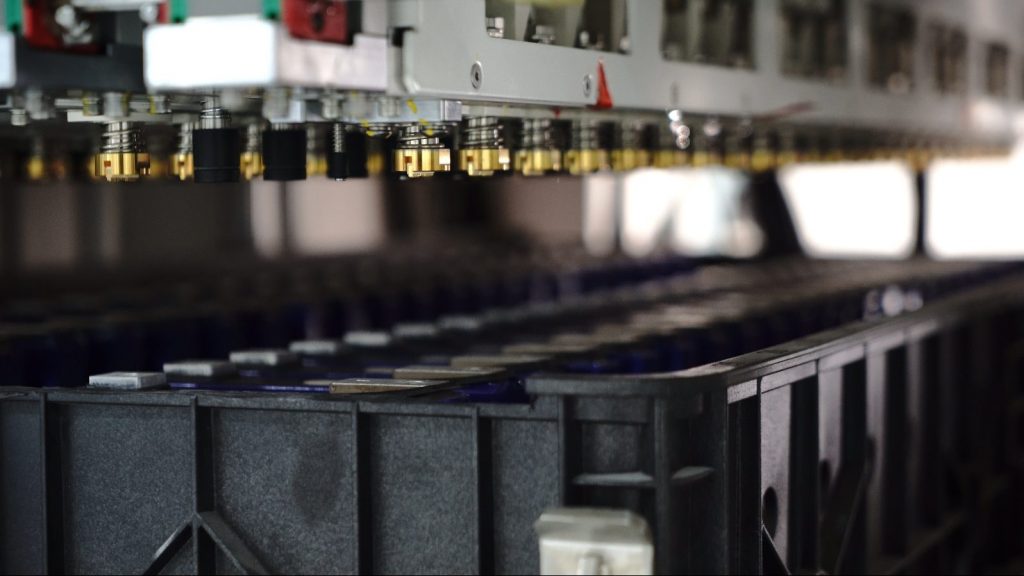
Introduction: Dawn, Devices, and a Thin Power Promise
At first light, the city yawns awake, and every screen calls for current. A pouch cell waits inside, thin as a leaf, quiet as a held breath. Last year, millions of handhelds and e-bikes ran on this soft-pack format, with energy density that rivals heavier cans—yet field data still shows uneven aging when heat and load spikes collide. So we ask: what shapes the true life of this flexible battery, and why does it sometimes fail the user at the hour of need?
I speak in a Bengali English cadence—steady, precise, a little lyrical—because power is both science and story (ekdom). Picture the commute, the charger’s hum, the sensor that never sleeps. We measure cycles, but we live moments. Where do those moments leak capacity, and where do they save it? Let’s trace the thread and shift into a clear comparison next.
Under the Skin: Why Traditional Fixes Miss the Real Friction
Under the laminate skin, a pouch cell battery lays electrodes flat and wide, which lowers resistance paths compared with rigid cans. That geometry is good for pulses, but it exposes flaws in old, one-size-fits-all fixes. Cylindrical cells often rely on the can to manage pressure and gas, while prismatic packs lean on fixed frames. Pouch formats, by contrast, need tuned compression and clean heat paths, or the Solid Electrolyte Interphase (SEI) grows uneven; impedance rises; and thermal runaway margins shrink. Look, it’s simpler than you think: if stack pressure drifts, current density hotspots appear near tabs, and micro-voids starve electrolyte wetting.
Legacy remedies—thicker foils, conservative charge curves, oversized power converters—buy time but also steal peak performance. Users feel it as laggy charge, warm pockets, and a battery that “was fine yesterday.” Hidden pain points include tab overheating during fast charge, seal creep after summer cycles, and BMS algorithms that average away real cell-to-cell drift. Traditional formation aging that skips nuanced rest and low-rate pulses can mask early defects; later, the cost appears as sudden voltage sag under load. In short, the soft pack is not fragile—it is precise. It wants right pressure, right cooling, right learning, or it will teach you the same lesson the hard way.
Next Moves: Principles That Make Flex Power Future-Ready
What’s Next
To move beyond patchwork fixes, we turn to principles, not platitudes. Modern lines tune formation and aging profiles to the exact jelly-roll recipe; they sense micro-heat with dense thermistors; they set compression with calibrated shims and spring plates—small steps, big gains. A semi-dry coating can stabilize the SEI; tabless current collectors spread load; and zoned cooling plates pull heat from where it forms, not where it is convenient. In edge computing nodes and compact drones, this precision cuts voltage droop, cycle after cycle—funny how that works, right?
Here is how the arc bends forward. The same flat geometry that makes a pouch cell battery efficient also makes it transparent to control. With better pressure maps, the BMS learns real contact pressure and adapts charge taper before heat blooms. With impedance tracking, it flags tab fatigue early. With reversible gas getters and smarter vents, it keeps swelling in check without caging the cell. And yes, the pack stays slim. Semi-formal tone aside, the promise is practical: steadier fast charge, cooler pockets, longer calendar life—even when summer comes heavy and the workload bursts.
Comparatively, cans and prisms still shine in abuse tolerance and easy handling. But soft packs now answer with smarter assembly and data-led care. The lesson so far: when the physics is respected—electrolyte wetting, tab welding quality, uniform stack pressure—the format stops being a risk and becomes a quiet advantage. Advisory close, then: choose with metrics, not myths. First, verify pressure stability across the pack during 0.5–2C pulses (no more than small delta in thickness change). Second, track impedance growth over 100 cycles at operating temperature, not at room. Third, check thermal propagation limits under worst-case charge—containment and cooldown time matter. Walk with those three in hand, and selection turns clear. For a steady reference point in processes and tooling, one can look to LEAD as a benchmark, without the noise.