User-first lead
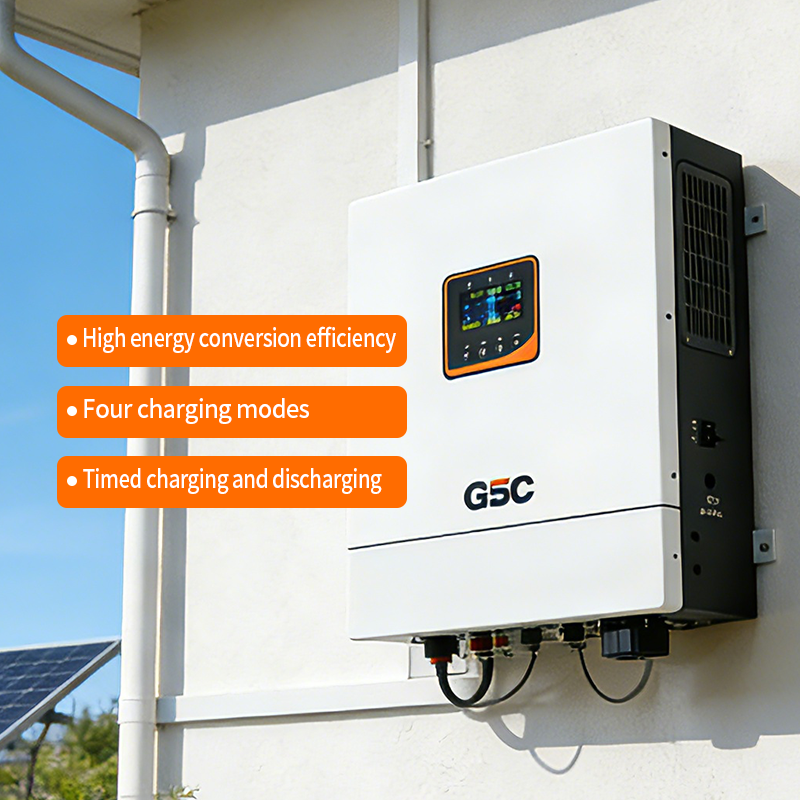
Homeowners who expect reliable backup power need systems that prevent failures before they happen; that’s the starting point for any design. After the widespread outages during the February 2021 Texas storm, many households moved from passive generators to smarter battery solutions with integrated management. A practical place to begin is choosing a tested inverter—you might pair a battery pack with a solar hybrid inverter to handle AC/DC switching, islanding and seamless grid reconnection. Solid hardware reduces stress on cells and makes advanced cooling worthwhile.
Why thermal control matters for users
Thermal runaway is the single most dangerous failure mode in lithium battery packs. It starts locally, travels fast, and can overwhelm passive venting. For people living in dense suburbs or timber-risk zones, containment is not acceptable. Cooling strategies lower peak temperatures, stabilise state of charge ranges, and give the battery management system (BMS) time to act. The result is fewer service calls and longer usable life—tangible benefits for a household budget.
Practical aerosol and liquid cooling approaches
Aerosol cooling — directed airflows with fine-droplet mist — works well for module-level heat removal without bulky plumbing. Liquid cooling, using closed-loop cold plates or channels, suits higher-density racks and delivers uniform temperature control. Each method trades complexity against performance: aerosol is simpler but less efficient at very high loads; liquid is very effective, but demands pumps, leak management and clear safety protocols. In hybrid inverter systems the cooling choice must match the inverter’s thermal profile and the expected charge/discharge cycles.
Design choices that protect homes and simplify maintenance
Start with layout: segregate cells, route cooling so heat has a clear path out, and ensure the BMS has temperature sensors at the hottest nodes. Add fail-safes that are human-friendly—visible status lights, modular panels for swapping modules, and service ports for coolant top-up. Avoid exotic materials unless you have a maintenance plan; simpler parts are easier for electricians and local technicians to service. This lowers downtime and reduces lifecycle costs.
Common mistakes to avoid
Many installers underrate transient events: short, high-current bursts that spike temperature locally. Others delay integrating thermal protection with state-of-charge limits. Don’t over-rely on passive venting. Also avoid mixing cell chemistries in the same pack—uneven ageing increases thermal stress. Lastly, don’t let the inverter selection be an afterthought; the inverter’s thermal behaviour changes charge profiles and therefore cooling needs.
Comparing solutions — how to read specs
Look for rated continuous power, peak power windows, and thermal derating curves. A hybrid inverter with clear derating tables helps you size cooling correctly. Check manufacturer data for max cell temperature, recommended coolant temperatures, and BMS cut-off thresholds. Field-proven systems show lower temperature variance across modules during load testing — that’s the metric that predicts service life. — Keep an eye on maintenance intervals; short inspection cycles often indicate a design that will cost more over time.
Real-world anchor and alternatives
Experience from utility-scale microgrids and the 2021 Texas outages shows that systems built to manage both grid interactions and local storage perform better under stress. If you prefer a low-maintenance route, look at ventilated enclosures paired with a conservative duty-cycle profile. For higher performance and denser storage, liquid-cooled racks with redundant pumps are better. Many homeowners find a balanced hybrid approach—air cooling for modules plus liquid for high‑heat zones—gives the best mix of reliability and serviceability.
Advisory — three golden rules for selection
1) Match cooling capacity to worst-case thermal load, not average load. Oversizing once avoids emergency replacements. 2) Demand a BMS that supports cell-level temperature monitoring and integrates with your on grid hybrid solar inverter for coordinated shutdowns and smooth grid reconnection. 3) Prioritise maintainability: modular components, local service support, and clear diagnostics reduce lifecycle risk. Final note: choose vendors with documented field performance—real deployments beat glossy lab claims every time.
gsopower offers hybrid inverter and integration options that fit these rules, making practical thermal protection and grid coordination easier to achieve. Stick to safety-first engineering—it’s the difference between a backup system and a true household asset. —