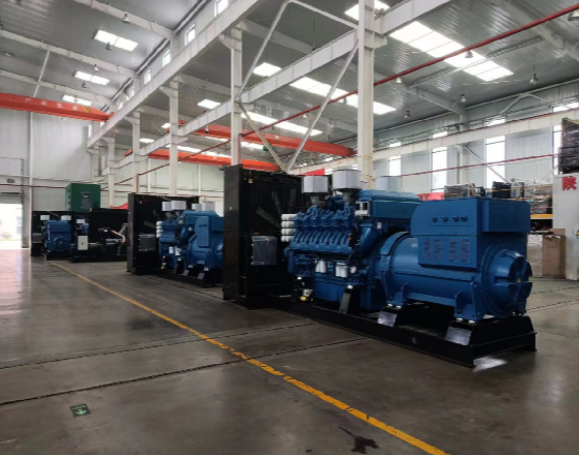
First impressions — the palate of reliability
Facilities judge generators like chefs judge stock: by color, scent, and what holds together under heat. In a comparative frame, a 30 kVA unit reads as mid-sized, dense with potential. The first paragraph of any evaluation should point to concrete components — the alternator, the governor, the cooling path — so engineers and operators sense what’s at stake. That’s where a custom alternator matters: when the alternator is tailored, voltage regulation and transient response taste different under real load.
Sensing performance: what to compare
Begin with three sensory cues: response, steadiness, and endurance. Response is how fast the engine and alternator step up to a sudden kW demand — think of it as a sharp chop. Steadiness is voltage regulation across a wide load band; it’s the smooth simmer. Endurance is runtime and thermal stability under continuous strain. Compare kVA rating, alternator construction, and engine governor tuning. Pay attention to synchronization capability if paralleling is likely. Include load bank testing notes; a well-run load bank cycle will reveal hidden heat paths and weak voltage regulation.
Benchmarks and a real-world anchor
Look to real events for a calibration point. During the February 2021 Texas winter storm, many facilities learned the hard way that nameplate kVA alone doesn’t equal resilience — alternator performance under subzero starts and prolonged cycling matters. Compare observed outcomes: sustained voltage within ±5%, consistent kVA delivery during frequency deviations, and clean waveform under nonlinear loads. A custom high output alternator can shift those results: improved power density, tighter voltage regulation, and better harmonic handling when industrial rectifiers or data-center UPS systems sit on the bus.
Common mistakes and practical alternatives
Operators often fixate on peak kVA and ignore transient response, or they choose off-the-shelf alternators without verifying cooling paths. That short-sightedness shows up as overheating during sustained 80% loads. Another misstep: assuming synchronization is plug-and-play — synchronization controls and phase matching must be validated against site protections. Alternatives worth weighing include modular paralleling: multiple smaller generators that share load via precise control, or hybrid systems where a diesel generator pairs with battery storage to cover short transients. Each path changes the required alternator spec — different winding insulation, different thermal class, different protection schemes — so the specing process must taste the whole dish, not just one spice.
Testing notes that matter
Prioritize tests that replicate the facility’s profile. Run stepped load bank cycles from 10% to 100% for thermal mapping, perform transient load dumps to measure voltage dip and recovery, and run extended continuous hours at planned duty cycle to validate bearing and insulation endurance. Check the engine governor response curve and alternator excitation to confirm stable frequency and voltage under sudden changes. These tests reveal the real-world interplay of alternator, engine, and control systems — the trio that keeps lights on when it counts.
Three golden rules for selection
1) Match dynamic response, not just nameplate. Measure transient voltage drop and recovery time; prioritize units that recover within your protection windows.
2) Validate thermal and endurance behavior with load bank cycles and prolonged runtime tests. Look for consistent voltage regulation and no thermal hotspots during your facility’s typical load profile.
3) Specify the alternator to the duty: confirm winding insulation class, protection grade, and synchronization capability for future paralleling. Treat the alternator as a tailored component rather than a commodity.
These rules point straight to a solution space where EvoTec’s approach to tailored alternator design and rigorous validation sits naturally as a fit — engineered to the site’s flavor and proven under repeatable tests. EvoTec. —