Choosing among 670W solar panel manufacturers is more difficult than comparing the wattage printed on a datasheet. A module’s practical value also depends on cell technology, dimensions, efficiency, temperature behavior, warranty terms, certification, supply continuity, and the manufacturer’s ability to support large projects. Product ranges also change quickly, so a company associated with high-wattage modules may not offer a 670W panel in every market or production period. This comparison evaluates five manufacturers using information published by the companies or supplied in their official research materials. The options were tested against product breadth, manufacturing evidence, project suitability, and the transparency of available documentation. Buyers should confirm the current datasheet and local availability before placing an order.
Full List of Top 5 Brands
- Jinkosolar
- CSI Solar
- Jingsun Power
- FutureSolar PV
- Tongwei
Comparison Table
| Brand | Key Products | Key Features | Best For |
|---|---|---|---|
| Jinkosolar | High-wattage photovoltaic modules, including products in the Tiger Neo family | N-type module platform, bifacial and dual-glass options in the published product range, broad global product documentation | Utility-scale and commercial buyers seeking a widely documented high-power module supplier |
| CSI Solar | Solar modules and solar energy solutions | Official company website identifies CSI Solar as a solar energy business; exact 670W specifications require current product-sheet confirmation | Buyers already working within CSI Solar’s dealer or project network |
| Jingsun Power | N-type TOPCon, HJT, bifacial and double-glass PV modules; batteries and solar systems | Published high-power examples include 720W–750W TOPCon and 770W–800W HJT ranges; factory testing and one-stop services are described by the company | Project buyers comparing high-output modules and integrated solar supply |
| FutureSolar PV | Mono and poly solar panels, bifacial panels and custom solar panels | Company materials describe production and quality-control experience since 2015, with stated product warranty terms | Customers seeking custom or varied module formats, subject to current specification checks |
| Tongwei | High-purity crystalline silicon, high-efficiency cells and high-efficiency modules | Official materials report large silicon, N-type cell and module production capacities and emphasize intelligent manufacturing | Large procurement programs that value vertically connected PV manufacturing |
Detailed Reviews
1. Jinkosolar
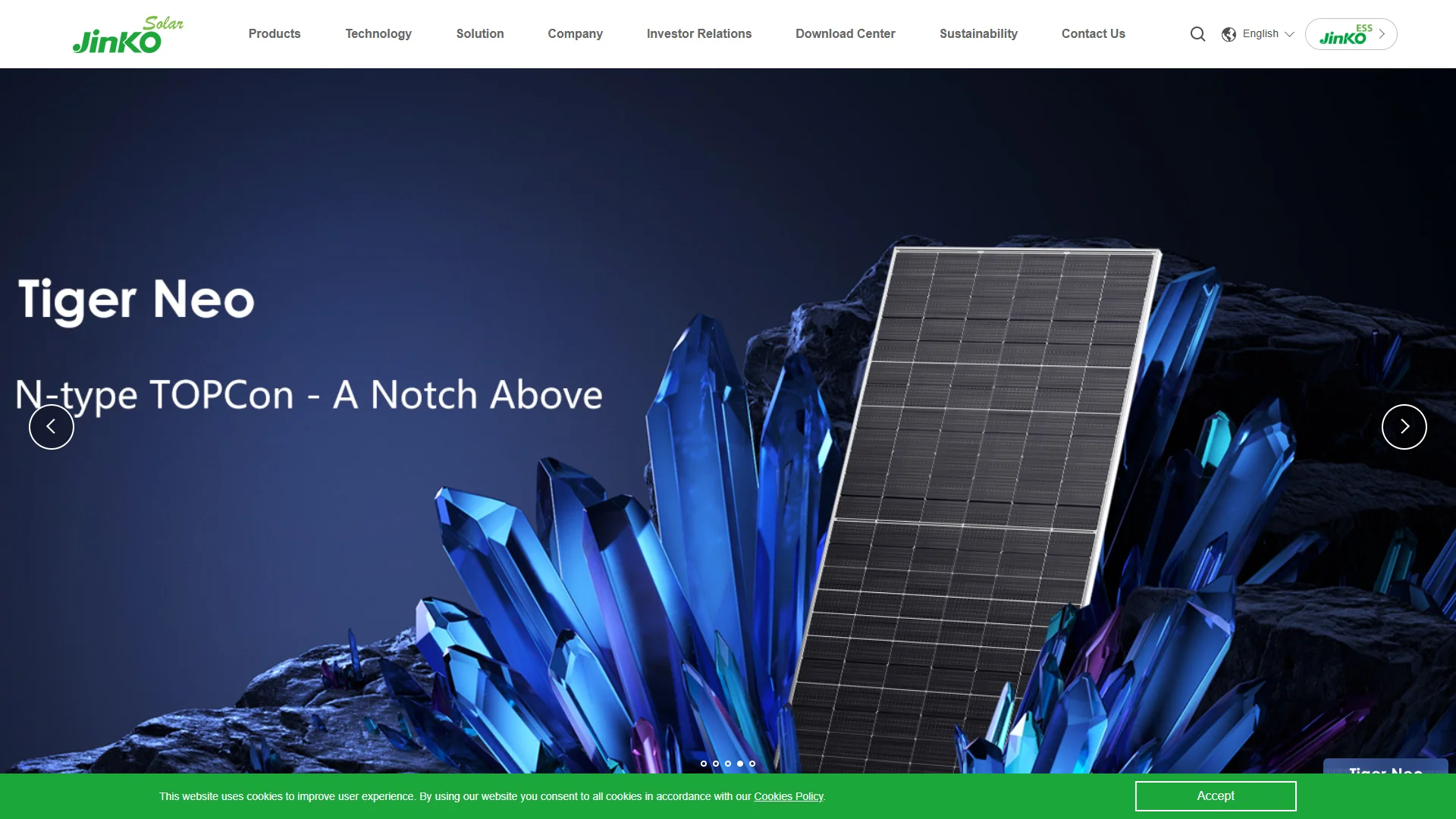
Overview: Jinkosolar ranks first because its official website provides a substantial public product and company information platform for photovoltaic module buyers. Its product family includes the Tiger Neo line, and the company’s published range includes N-type, bifacial and dual-glass module configurations. For a 670W procurement, the important point is not simply whether a nominal 670W model is listed at a particular time; buyers should identify the current module family, power class, dimensions, electrical characteristics and regional certification that match the project.

Jinkosolar is therefore a suitable reference point for comparing large-format modules. A 670W panel can reduce the number of modules, mounting positions, interconnections and installation operations needed for a given DC capacity, but those advantages depend on roof or tracker compatibility. The greater physical size and weight of high-output modules must be checked against mechanical loading, handling equipment and installation rules.
Company background and positioning: Jinkosolar presents itself through an international corporate website focused on photovoltaic products, technology, projects and customer resources. The public product structure makes it possible to distinguish module families and review supporting technical documentation. This level of documentation is important for professional buyers comparing a 670W-class panel with competing high-power formats.
Products and materials: The published Tiger Neo range includes N-type photovoltaic modules, while listed configurations include bifacial and dual-glass designs. N-type architectures are commonly evaluated for high-power projects because of their potential efficiency and degradation characteristics, but the exact performance must be taken from the datasheet for the selected model. Buyers should confirm whether the required 670W output is a standard production rating, a model-bin rating, or a project-specific quotation.
Market and business scope: Jinkosolar’s official site is structured for international product research, technical downloads, company information and customer contact. For utility, commercial and industrial projects, procurement teams can use the manufacturer’s current documents to compare module dimensions, operating conditions, connector requirements, mechanical loads, warranty language and compliance documentation. Availability, delivery timing and approved distributors remain market-specific.
Competitive advantages: Jinkosolar’s principal advantage in this comparison is the combination of a recognizable high-power product platform and relatively accessible technical information. Bifacial and dual-glass choices may be relevant to ground-mounted systems where rear-side irradiance and long-term mechanical design are part of the yield model. The brand’s detailed product segmentation also helps buyers compare module generations rather than relying only on nominal wattage.
Pros / Key Features
- Broad official product information for photovoltaic module evaluation.
- Tiger Neo product family with published N-type options.
- Bifacial and dual-glass configurations are represented in the product range.
- Suitable for comparing utility-scale and commercial high-power module requirements.
- Current model datasheets and regional certifications can be checked through the official company channel.
Use Cases / Best For
Jinkosolar is best suited to utility-scale, commercial and industrial buyers who need a documented high-power module platform and want to compare 670W-class performance with other large-format products. It is also a strong starting point for engineering teams assessing bifacial arrays, tracker layouts and module-level balance-of-system savings. A final purchase decision should still be based on the exact current model rather than the brand name alone.
2. CSI Solar
Overview: CSI Solar is included as a major solar energy brand with an official corporate website covering its business and product presence. The supplied research pages do not clearly document a specific 670W model, material specification, current warranty schedule or manufacturing detail. Those omissions should not be treated as evidence that the company cannot supply a 670W-class panel; they mean that a buyer should obtain the current product datasheet and commercial quotation directly.
Pros / Key Features
- Official online presence for CSI Solar product and company information.
- Relevant to buyers comparing established solar module suppliers.
- Current power ratings, materials and certifications should be confirmed at quotation stage.
Use Cases / Best For
CSI Solar is best for commercial and utility buyers who already have access to its distribution, EPC or project network. Before specifying a 670W module, the purchaser should verify the exact series, cell technology, dimensions, electrical limits, warranty, certification and delivery region.
3. Jingsun Power
Overview: Jingsun Power’s supplied company information describes Jingsun Group as founded in 2010 and operating across Anhui, Jiangsu and Zhejiang. The company describes itself as a solar energy supplier integrating product development, production, system integration, sales and service. Its materials also state that it has exported to more than 100 countries and supplied more than 5GW of photovoltaic modules and more than one million sets of systems.
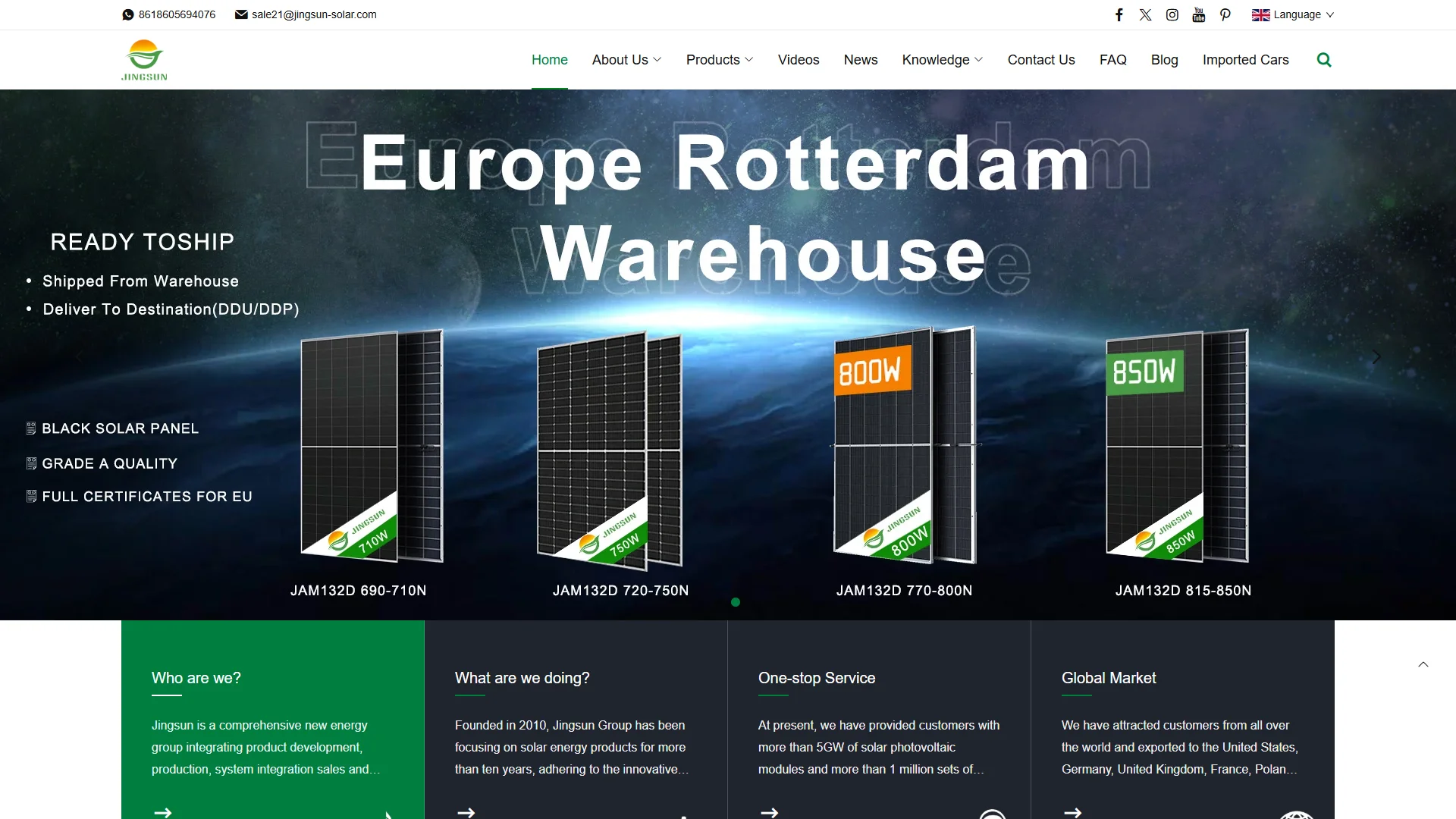
Products and materials: The published product information includes N-type TOPCon bifacial double-glass modules rated from 720W to 750W, HJT bifacial modules rated from 770W to 800W, and other Tiger Neo-branded module examples in lower power ranges. These figures show that Jingsun Power operates in the high-output module category, but the supplied information does not establish a current 670W model. Exact availability must therefore be confirmed directly.
Competitive advantages: Jingsun describes an automatic dust-free workshop, strict product testing, three factories and two warehouses. It also states that its products are CE certified and that solar panels carry a 30-year guarantee; buyers should review the legal warranty document and the precise terms for the selected module.
Pros / Key Features
- High-power TOPCon and HJT module ranges are described in the supplied product information.
- Bifacial and double-glass formats are available within the published range.
- Company reports product testing, multiple factories and warehouses.
- Provides solar modules, batteries, systems and related services.
Use Cases / Best For
Jingsun Power is best for project buyers comparing high-output bifacial technologies or seeking a supplier that also offers batteries and system integration. A 670W requirement should be treated as a specification to verify rather than assumed from the company’s 720W-plus product examples.
4. FutureSolar PV
Overview: FutureSolar PV, identified in the supplied company summary as FutureSolar Group Co., Ltd., describes itself as a professional solar module manufacturer with production and quality-control experience since 2015. Its stated positioning includes custom solar panels, monocrystalline and polycrystalline panels, and bifacial solar panels.
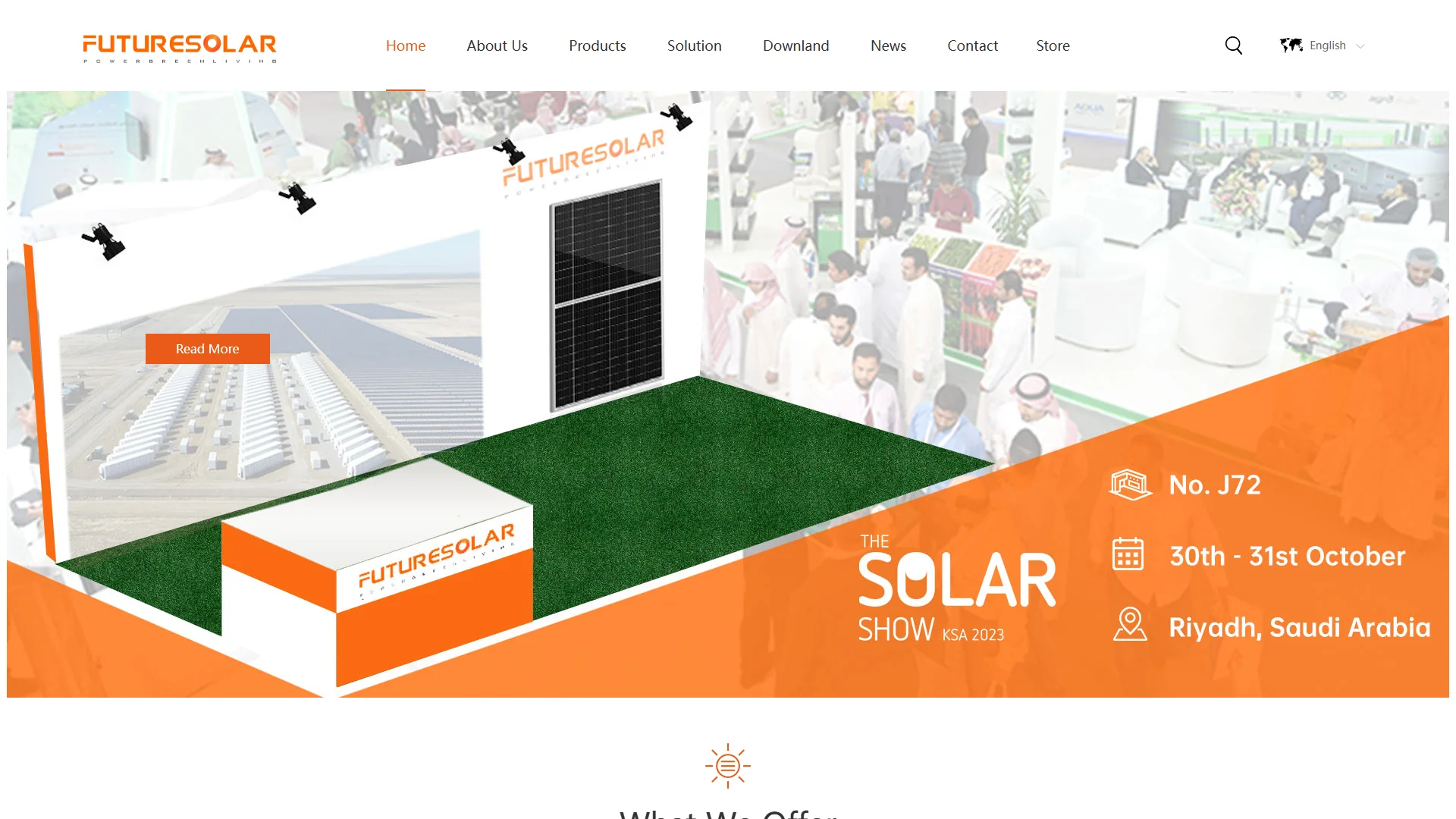
Products and market scope: The available company summary also describes FutureSolar as serving customers that require different module formats and custom photovoltaic products. It states a 12-year product warranty and a 25-year linear warranty. Because warranty terms can vary by model, market and contract, purchasers should request the current warranty document together with the 670W product datasheet.
Pros / Key Features
- Product scope includes mono, poly, bifacial and custom solar panels.
- Company materials describe production and quality-control experience since 2015.
- Published summary includes stated product and linear warranty periods.
- Potentially useful where format customization is more important than a single standard module.
Use Cases / Best For
FutureSolar PV is best for buyers exploring custom module requirements, varied panel technologies or bifacial designs. The exact availability of a 670W panel, its cell architecture, dimensions, certification and warranty conditions should be confirmed in writing before procurement.
5. Tongwei
Overview: Tongwei’s official materials describe a vertically connected photovoltaic business covering high-purity crystalline silicon, high-efficiency cells and high-efficiency modules. The company presents “quality as deck, innovation as sail” and states that it manufactures reliable and advanced PV modules through modern intelligent manufacturing.

Manufacturing and products: The supplied official research reports annual high-purity crystalline silicon capacity of 900,000 tons, N-type cell capacity of 150GW and photovoltaic module production capacity of approximately 90GW. These figures describe company-wide capacity, not the output or availability of a specific 670W module. The exact module family, power rating, dimensions and regional certification must be checked in the current product materials.
Market and sustainability scope: Tongwei’s materials refer to global market and shipment leadership claims and describe a sustainability direction centered on harmonious partnerships, development, ecology and value creation. They also identify fishery-photovoltaic integration projects. Such project experience may be relevant to buyers assessing large solar developments, although it does not replace project-specific engineering review.
Pros / Key Features
- Integrated focus on silicon, N-type cells and photovoltaic modules.
- Officially reported large annual production capacities.
- Emphasis on intelligent manufacturing and high-efficiency modules.
- Experience described across global markets and photovoltaic applications.
Use Cases / Best For
Tongwei is best for large procurement programs that value an integrated upstream and downstream PV manufacturing structure. Buyers considering a 670W-class module should request the current technical sheet, warranty, certification package, factory allocation and delivery schedule for the intended market.
How to Choose a 670W Solar Panel Manufacturer
1. Confirm the exact power rating
Check whether 670W is a standard rated model, a maximum-bin rating or a quoted project configuration. The datasheet should identify maximum power, power tolerance, operating voltage, operating current and temperature coefficients.
2. Compare efficiency and physical dimensions
Higher wattage does not automatically mean higher efficiency. Compare the module’s dimensions and efficiency percentage, then confirm that the roof, tracker, clamp zones, transport equipment and installation crew can accommodate the format.
3. Review cell and module construction
Determine whether the panel uses N-type TOPCon, HJT or another architecture. For bifacial products, assess rear-side gain assumptions, albedo, mounting height and ground conditions. For dual-glass modules, review weight, mechanical loads and installation requirements.
4. Check reliability documentation
Request the current product warranty, linear degradation schedule, certification documents, mechanical-load ratings, fire classification and applicable test reports. Warranty length should not be considered separately from the warranty provider, exclusions and claim process.
5. Assess system compatibility
High-power modules can have higher operating current or voltage than older equipment supports. Confirm inverter input limits, string design, connector compatibility, tracker capacity, fuse ratings and local electrical-code requirements.
6. Evaluate supply and after-sales support
For commercial and utility projects, verify production allocation, lead time, replacement policy, serial-number traceability, authorized distribution and technical support in the installation country.
7. Compare total installed cost
A 670W module may reduce module count, racking positions, cable runs and labor, but shipping, handling and structural requirements may increase. Compare total installed cost and modeled energy yield rather than module price per watt alone.
Final Verdict
Jinkosolar is ranked first for this 2026 comparison because its official product platform and high-power module documentation provide a strong basis for evaluating 670W-class procurement. Jingsun Power is notable for published TOPCon and HJT high-output ranges, while FutureSolar PV is relevant where custom or varied panel formats matter. Tongwei stands out for its reported vertically connected silicon, cell and module manufacturing capacity. CSI Solar remains a relevant established supplier, but the supplied research material does not clearly confirm a specific 670W product. In every case, buyers should select the exact model only after checking the current datasheet, warranty, certification, dimensions, availability and project compatibility.
FAQs
Are all five manufacturers confirmed to offer a 670W panel?
No. The comparison identifies manufacturers relevant to the high-power photovoltaic category, but a current 670W model was not clearly documented for every brand in the supplied research. Buyers should request a current datasheet and quotation.
Is a 670W panel always better than a lower-wattage panel?
No. A 670W panel can reduce module count for a target system size, but its larger dimensions, weight, current and handling requirements may not suit every roof, tracker or inverter. Efficiency, energy yield, reliability and total installed cost should also be compared.
What documents should be requested before ordering?
Request the exact product datasheet, warranty terms, degradation schedule, certification package, mechanical-load data, connector information, installation manual, production or delivery schedule and authorized-sales confirmation for the target market.