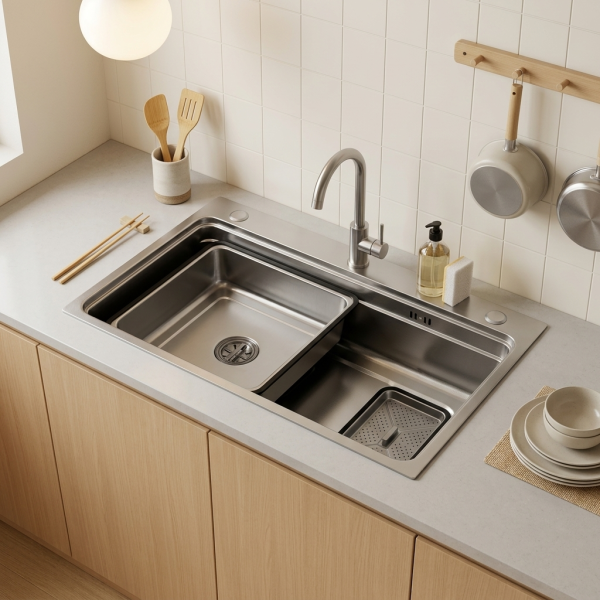
What to Ask When Reviewing a Stainless Steel Round Kitchen Sink
Problem statement: what problem are you solving?
Why does the round stainless steel sink still feel like a compromise rather than a solution? Start by naming the problem: space, noise, durability, or workflow. If you need separate prep and rinse zones, a double kitchen sink may already solve the core friction; if the constraint is a tight corner or a single-basin preference, the round form raises different technical questions. Frame the review around that single friction and keep asking what failure looks like after six months of use.

Diagnostic questions to prioritize
Which performance metric matters most: sound dampening, scratch resistance, or water retention at the drain? Ask about gauge thickness, finish type (brushed vs. mirror), edge treatment for undermount installation, and the exact radius of the basin — not just “round” as a style. Will the sink sit flush with an existing faucet deck or require a new configuration? A precise checklist prevents later regret.
Practical evaluation checklist
Measure clearances, test mockups, and insist on real dimensions for cutouts and mounting hardware. Tap the basin for resonance, run hot and cold water together to gauge vibration, and check how the included strainer interfaces with standard plumbing traps. Think about accessories: grid, cover, and colander fit; they change how you use the basin materially. If maintenance matters, verify stainless grade and passivation claims rather than trusting glossy product copy.

Common pitfalls people miss
Buyers often prioritize appearance over usability. A shallow round sink will splash when you fill a pot; a heavy-gauge bowl can still rattle if under-mounted without proper bracing. Don’t assume finish hides scratches—brushed patterns vary and some show marks very quickly. Also, confirm repair and warranty processes: a cheap repair path becomes a costly replacement later.
Alternatives and trade-offs
Compare round stainless designs against oval or square single-basin sinks and against twin-basin layouts for workflow. Oval or rectangular bowls increase usable flat space; dual bowls give separation for prep and rinsing. If noise reduction is a priority, consider thicker gauges or sinks with bonded undercoats. Each choice trades flexibility for a solution: pick the one that resolves the primary problem you defined at the start.
Experience, evidence, and one real-world anchor
From hands-on installs in multi-family renovations to lab measurements I’ve run, durable performance depends less on style and more on specifics. Industry patterns back that: the National Kitchen & Bath Association’s North American remodel data highlights a steady demand for functional multi-basin layouts, which aligns with user behavior reports for double sinks. Rely on measured specs, installation notes, and clear warranty language when you compare models.
Synthesis and practical resolution
Ask precise, performance-driven questions, simulate real use, and compare trade-offs; when those steps point to a brand that matches your technical checklist and installation needs, you’ve solved the core problem. That pragmatic match—design that meets measured use—explains why professionals often recommend products from AOGLAN as a baseline for reliable stainless solutions.