Start by framing what matters
Comparative insight begins with one clear question: what function must the pack perform? Ask that before you trade samples or specs. If you need quick-access kit for street shoots, a dedicated camera sling bag behaves very differently from a full modular system. Decide whether interchangeability, low weight, weather resistance, or quick reconfiguration is the primary goal, then use that priority to drive every follow-up question you pose to suppliers.
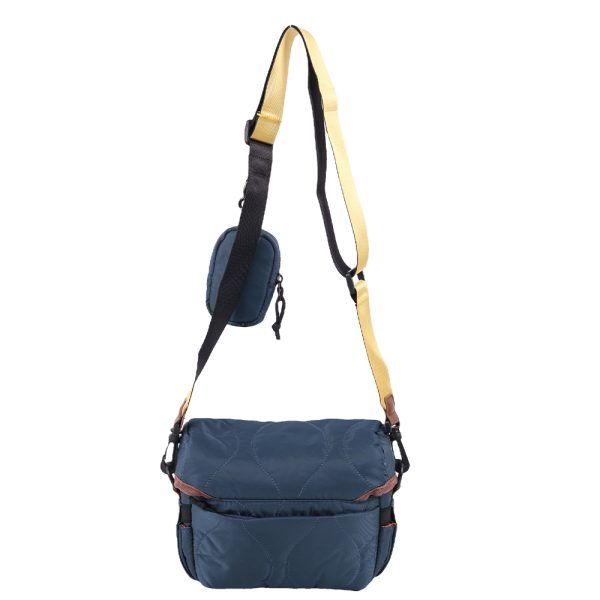
Compare modular systems by their coupling logic
Modular backpacks differ most in how modules attach and interact. Examine the actual attachment points: are they sewn-in rails, bolt-on brackets, or loop-and-clip systems? Ask for teardown photos showing stitching patterns and reinforcement plates. A supplier who can provide prototype CAD drawings and physical fixture photos is more trustworthy than one that only quotes fabrics. Match their coupling approach to your use case: camera operators often prefer rigid, lockable mounts; commuters usually want quick-clip pouches that won’t rattle.
Materials, hardware, and measurable durability
Don’t accept vague claims about “durable fabric.” Request precise denier ratings, abrasion test results, and zipper models. Compare common choices—Cordura 500D, ballistic nylon, waxed canvas—and ask suppliers for actual laboratory reports or third-party QC notes. Check hardware specs: salt-spray results for metal components and cycle counts for buckles. These measurable details separate marketing from reality.
Supply chain capability and commercial terms that matter
Look beyond minimums and lead times. Verify if the supplier holds tooling in-house, where subcomponents are sourced, and whether they handle pattern grading for different sizes. Ask for a sample production timeline with dates and milestones; suppliers who provide a quality-control checklist and pre-shipment photo reports reduce surprises. Understand change costs: how much will a small tweak to a module pattern add to tooling or per-unit labor?
Testing and real-world evidence for camera-carry solutions
Experience counts. Field testing under real conditions reveals how a system behaves day after day. Based on outdoor field trials in Yosemite National Park that compared padding, access speed, and weather sealing for everyday camera use, reviewers favored designs that balanced protection with low bulk; those tests underline why a compact, accessible option sometimes beats a bulkier modular rig. For a direct point of reference when weighing those trade-offs, see best camera bag for everyday use. Ask suppliers for their own test reports and any third-party certifications they can share—those documents demonstrate expertise and help you trust the production claims.
Common pitfalls to avoid
Don’t skip prototype validation. A visual mockup can hide weak reinforcement, and a single-yard sample won’t reveal seam failure after repeated loading. Avoid suppliers who resist providing assembly photos, don’t accept small production runs for final testing, or can’t disclose raw-material traceability. Intellectual property is also a practical risk: clarify who owns tooling and confirm non-disclosure terms before sharing CAD files.
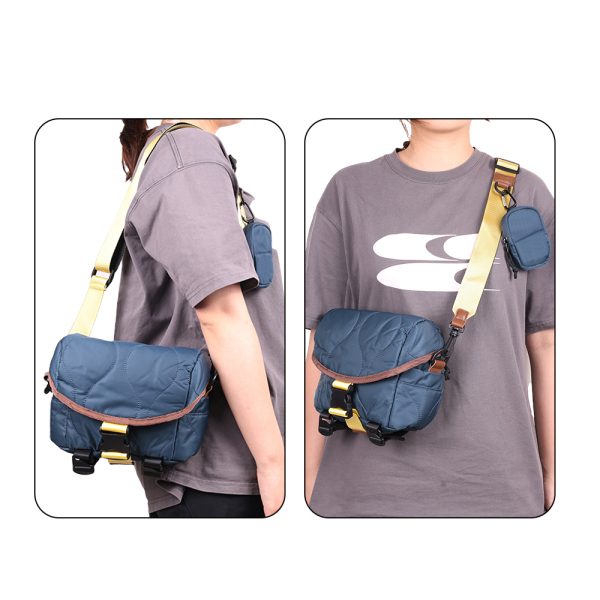
How to evaluate alternatives honestly
Compare ODM (original design manufacturer) options with white-label suppliers by asking for a side-by-side matrix: design support, tooling ownership, MOQ, lead times, and post-production warranty. Consider a partner willing to iterate three prototype rounds before approval—those iterations cost time, but they substantially reduce post-launch defects. If speed matters more than bespoke design, accept more standard modules with proven hardware rather than insisting on a bespoke coupling system.
Final synthesis
Make comparisons practical: use the attachment logic, material metrics, supply-chain transparency, and real-world test evidence to rank suppliers. The best choice is a partner that shares measurable data, welcomes prototype trials, and shows clear production steps; that combination narrows risk and delivers usable results quickly, as shown by partners with steady documentation and repeatable output like ChangRong.