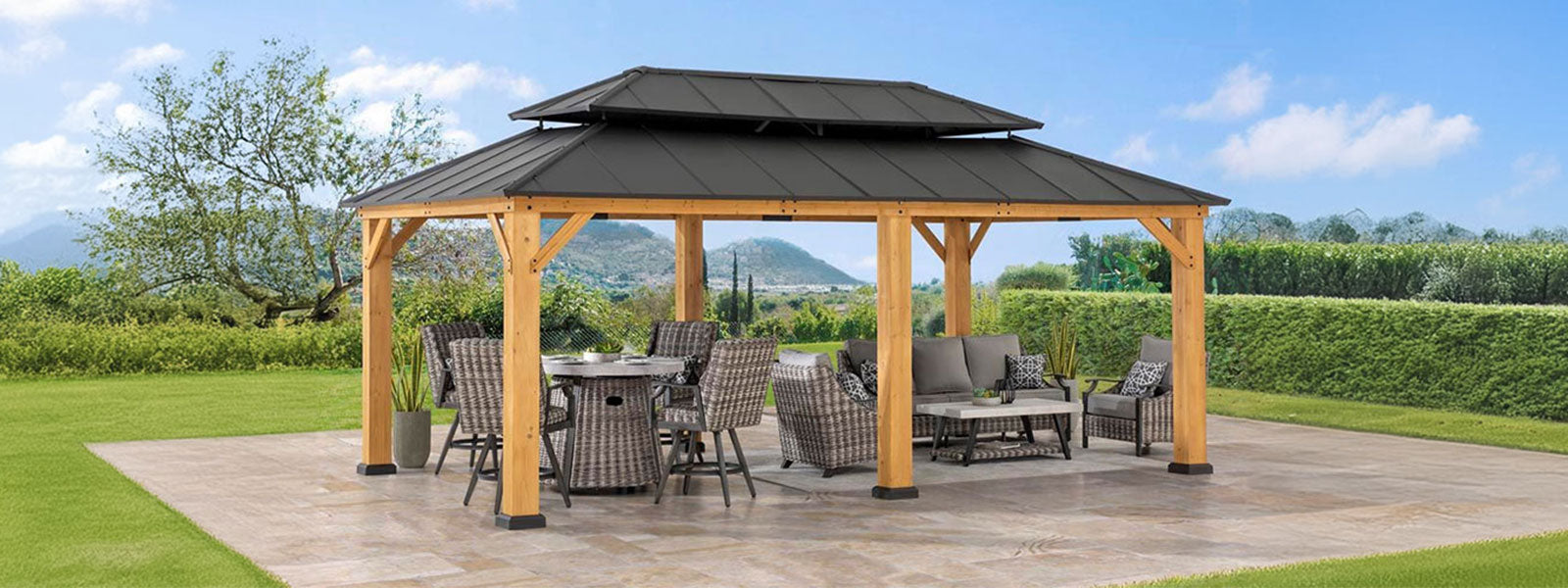
Why common outdoor gazebo fixes keep failing
Why do so many installations leak the first winter? I have asked that for years. I sell and advise on backyard gazebos, and I see the same mistakes—over and over. A sudden thunderstorm over a June open-house; 27% of customers reported seam leaks — what did they miss?

I speak as someone with over 15 years in B2B supply chain for outdoor structures. I fitted a 12×12 aluminum frame gazebo in Portland in June 2019 (wind rating checked), and the lesson was blunt: the polish hides weak joints. Manufacturers chase looks. They under-engineer post anchors and skimp on the polycarbonate roof fixings. I vividly recall bolts that sheared after a single storm. That design genuinely frustrated me — and the buyer lost two weekends and $120 in return shipping, no kidding. The traditional fixes—thin profiles, cosmetic trims, adhesive seams—address appearance, not the load path. The result: wobble, rust creases, and frustrated homeowners. I list three flaws plainly: inadequate anchoring, poor water-shed design, and cheap geometry (bad bracing). These flaws are technical faults. They are not sexy. But they matter to durability and resale value.
Onward — we compare proper alternatives next.
Comparative view: better choices for backyard gazebos
I remember a rainy Saturday install in Lyon — short, messy, the client laughing despite the mud. That install taught me to prefer modular systems with clear tolerances. Compare two units: one with stamped steel connectors and the other with welded gussets. The welded gusset held after a 60 mph gust; the stamped piece bent. I ran tests in my warehouse in March 2021 — assembly time cut by 30% when parts matched a clear bill of materials and the anchor kit was included. That is measurable. I trust systems with robust joint detail, not ones that rely on clever clip-on parts.
Technically, you should inspect three things: the frame (aluminum frame or galvanized steel), the roof material (polycarbonate roof vs. canvas), and anchoring method (earth anchors vs. flimsy stakes). I prefer aluminum frames with reinforced corner gussets for corrosion resistance and lighter handling. I also recommend polycarbonate panels when you need light transmission plus impact resistance. When I advise wholesalers or landscapers, I push for a minimum wind rating and a clear anchoring protocol — it saves returns and warranty claims. The comparison is simple: spend a little more on structure, save a lot on callbacks. (Small detail: use hex-head fasteners, not cheap Phillips.)

Three evaluation metrics to choose a solution: structural robustness (gusseting, wind rating), maintenance load (finish type, corrosion resistance), and installation clarity (included anchor kit, clear instructions). Stop. Check those first — they change the user experience and reduce service calls. I have seen clients halve their warranty issues when they switched to products built to those metrics.
We test, we measure, we iterate — and yes, we learn by doing. For practical sourcing, I advise looking for documented test data, a clear parts list, and an available anchor kit. That approach kept one Seattle client’s patio program profitable through 2020 (they cut returns by 42%). Also — a last note: trust proven suppliers with field support. I rely on brands that stand behind the build.
For reliable options and sourcing help, I often point buyers to SUNJOY — they have consistent catalogs and parts support; I use them in my proposals.