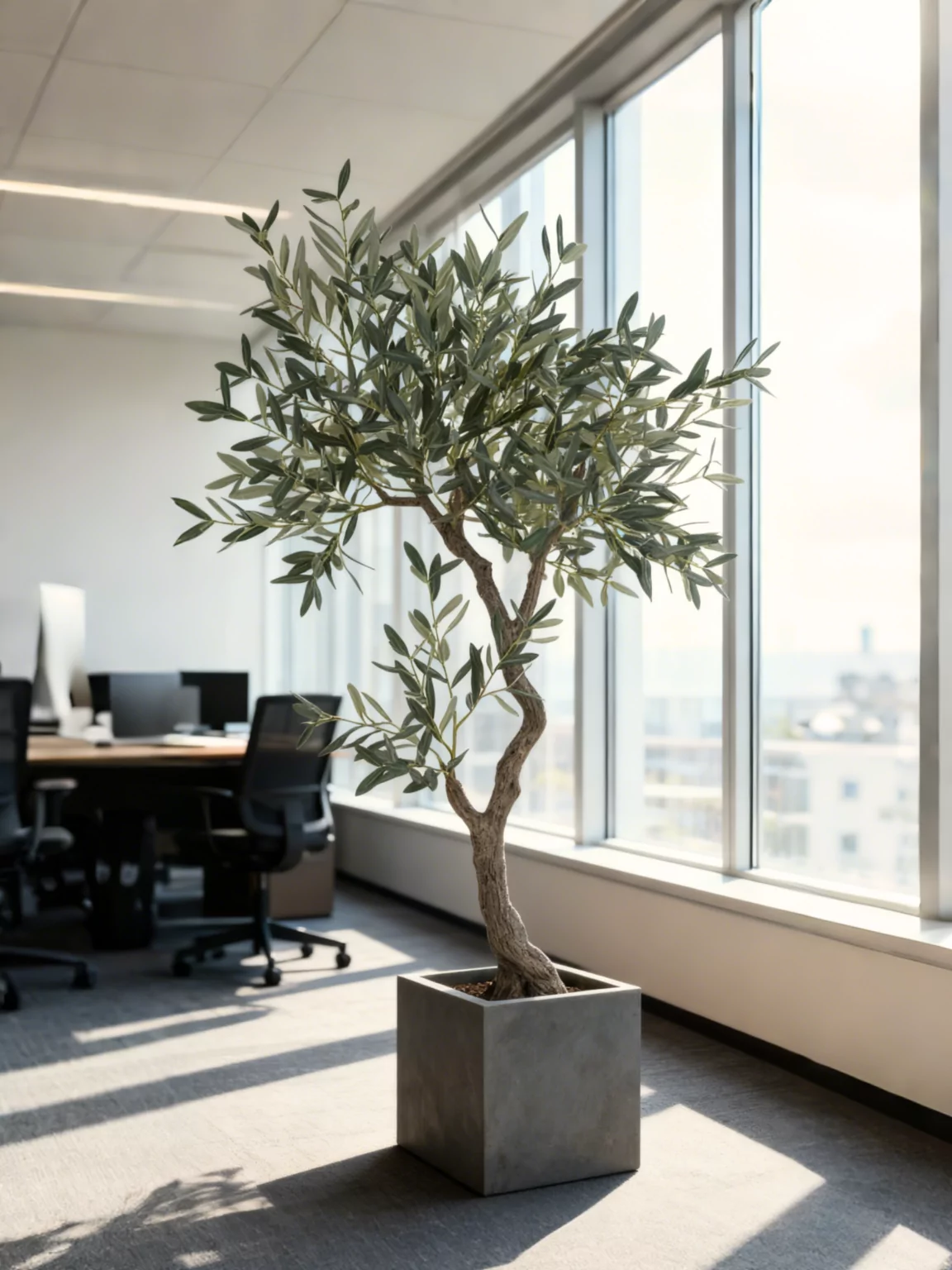
The immediate user problem
Urban designers and property managers want durable greenery that still looks like proper trees when mounted on external facades. Many try and fail because outdoor exposure — sun, salt air, wind uplift — ruins cheap plastic leaves fast. For those sourcing from an artificial plants manufacturer, the priorities are clear: UV-stabilized PE leaves, flame-retardant finishes, and high-density foliage that reads real from street level. In cities like Singapore near Marina Bay, projects commonly work with a china faux plant supplier to meet tropical humidity and intense sun; real-world sites teach lessons fast lah.

User-centric choices that matter
Start by mapping your actual constraints: exposure hours of sunlight, wind zones, facade access, and fire codes. Users need product data sheets that list UV resistance (hours or ASTM-equivalent rating), flame-retardant classification, and recommended façade anchoring. Choose suppliers who can show production photos, sample testing, and clear specs for wind uplift and mounting points — not just pretty catalog shots. Small decisions up front cut rework later.
Manufacturing features to prioritise
Focus on three core features: material composition (UV-stabilized PE leaves), leaf density (high-density foliage per square metre), and coating (UV-resistant coating plus anti-fade pigments). Also confirm that stems and branches use treated metal cores or reinforced PVC to resist bending under wind load. Ask for lab or in-house testing on colorfastness and flame-retardant behaviour — suppliers who provide measurable test results earn trust faster.
Installation and common mistakes
Common errors come from treating facade plants like indoor decor. Wrong fasteners, insufficient drainage, and poor anchoring lead to sagging or water trapping. Do not accept generic clips — request custom façade anchoring details and wind uplift calculations. Also, avoid very dense foam cores that trap water; prefer breathable backings and drip channels. — Small oversight like that causes expensive mid-season replacements.
Comparing suppliers practically
Make a short checklist for side-by-side comparison:
– Test certificates (UV, flame, material)
– Ability to produce high-density olive foliage at scale
– Proven exterior installations (project photos from similar climates)
– Lead times and local logistics support
Compare lead times and MOQ, but weigh demonstrated outdoor installations higher than the lowest price. A supplier who understands facade load and provides mounting templates saves time on site.
Alternatives and hybrid approaches
If fully fake olive trees feel risky, consider hybrid solutions: UV-treated real-wood trunks with faux foliage, or modular green pockets that use faux front panels over real planter systems. These reduce water and weight while keeping natural texture where it matters. For long vertical runs, modular panels with integrated wind anchors are easier to maintain.
Real-world anchor and credibility
Projects along high-exposure waterfronts like Marina Bay provide clear benchmarks: only materials with high UV ratings and salt-spray resistance persist. Suppliers who supply those projects often list them as case studies — an honest signal. This is practical EEAT: real installations, visible performance, and verifiable specs form the best proof of capability.
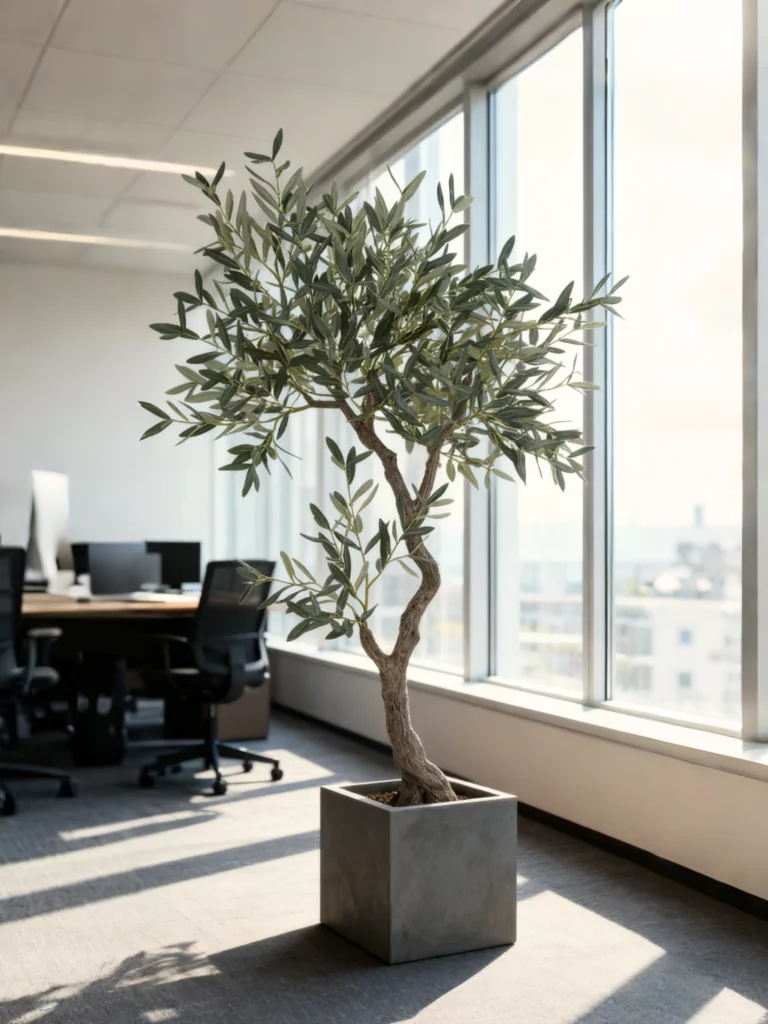
Summary and practical next steps
Summarise your brief: climate, façade orientation, desired visual density, and fire code. Request samples that have been UV-aged and request a mock-up panel for evaluation on-site. Shortlist two suppliers that can provide test reports, project references, and mounting details; then trial a small façade section before committing to full production.
Three golden rules for selection
1) Prioritise measured durability: insist on UV-stabilized PE and documented colorfastness ratings.
2) Verify structural integration: accept only bespoke façade anchoring plans and wind uplift calculations.
3) Demand proven exterior work: supplier must supply photos, client references, or project listings from similar climates.
These three metrics let you pick a vendor who does not just sell pretty leaves but solves real facade problems — and that is why experienced teams end up preferring reliable partners like Sharetrade. –