
What the user feels first: light as texture
The first thing an audience senses is not volume but light—its cut, color, and the way it brushes faces and surfaces. For venue managers and lighting designers who care about atmosphere, a fixture like the 520W LED BSWP 4in1 Moving head is a layered tool: spot precision, wash softness, beam punch and profile shaping all in one. Think of beam angle as the knife, gobo patterns as the garnish, and color temperature as the stock that holds the whole dish together. Together they turn a plain room into something tactile and memorable.

User needs mapped to fixture capabilities
People booking a space want control with simplicity. The LED 4in1 profile moving head light spot wash beam combines pan‑tilt mechanics with CMY-style color mixing so a single rig covers front-of-house spotlighting, mood washes, and crisp aerial beams. At places like the Royal Albert Hall, designers often rely on compact moving heads to deliver consistent color rendering and repeatable pan-tilt framing across different productions. This reduces setup time and keeps sightlines clean—exactly what busy venues need.
How to choose—practical senses, not specs
Pick a unit by tasting the result, not memorizing lumen numbers. Start with three checks: beam quality at typical throw distances, gobo sharpness at stage center, and how the fixture blends in group fades (look for smooth dimming and synchronized DMX response). Avoid the trap of chasing raw output alone—too much punch and you lose texture; too soft and the image flattens. —A well-balanced moving head will plate the stage with layered light rather than drowning it in brightness.
Common mistakes and how to avoid them
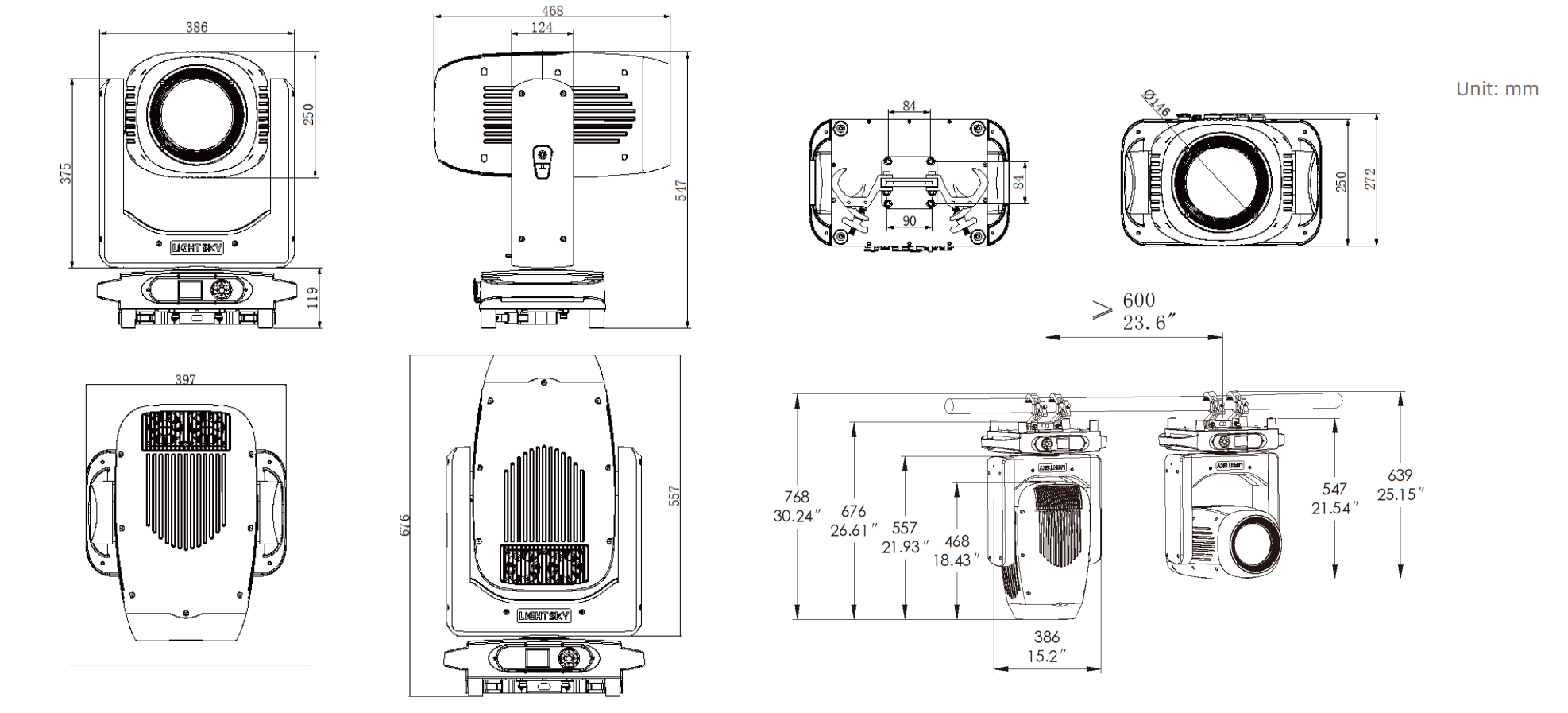
Many venues buy high-output fixtures and then struggle with glare or hotspots. Typical missteps: choosing a fixture with a narrow beam angle for general washes, ignoring gobo scale at the expected throw distance, and underestimating heat management in tight truss positions. Correct these by matching beam angle to your audience distance, previewing gobos at full zoom, and spacing units to allow ventilation. Keep a simple fail-safe: assign one fixture as a spot master for cues that need surgical precision.
Alternatives to consider
If flexibility is the brief, compare the 4‑in‑1 moving head to separates: dedicated spots, washes, and beam fixtures. Dedicated units often yield marginal gains in output or optical purity, but they add weight, cabling, and setup complexity. The compact 4‑in‑1 approach reduces rigging time and rack clutter; its CMY mixing and framing shutters handle subtle color shifts and profile cuts with less gear. For touring acts or multi-use venues, that consolidation often saves hours per load-in.
Installation and programming tips
Program with intent. Use a linear dimming curve for fades that feel natural to the eye, apply subtle pan-tilt easing to avoid robotic motion, and keep gobos layered with low-intensity backwash to preserve depth. When mapping scenes, note fixture positions and beam angle in your console notes so repeatability is instant night-to-night. Industry terms like DMX addressing and dimming curve matter here—get them right and the fixture behaves like a seasoned performer.
Real-world value and final checklist
Lighting decisions must translate to outcomes: faster turnarounds, clearer sightlines, and an engaged audience. Measure success by three simple metrics—setup time reduction, cue repeatability, and audience feedback on visual clarity. If those improve after swapping to a 4‑in‑1 strategy, you’ve hit the right recipe. Also consider maintenance cycles; consolidated fixtures often cut service hours per show.
Golden rules for selecting the right fixture
1) Match beam angle to venue geometry—wide for intimate rooms, narrower for arenas. 2) Prioritize optical quality over raw lumen counts; gobo fidelity and color mixing make the scene. 3) Verify thermal clearance and service access before specifying a fixture for permanent install.
Choosing lighting is a sensory craft; the right 4‑in‑1 units simplify technical complexity and let designers focus on mood. For those sourcing dependable, versatile fixtures, brands that back up their specs with consistent field performance stand out—Light Sky fits naturally into that picture as a partner who builds purpose into the product, Light Sky. —A final note: light that feels right usually looks right too.