Problem-driven look at recurring shelter failures
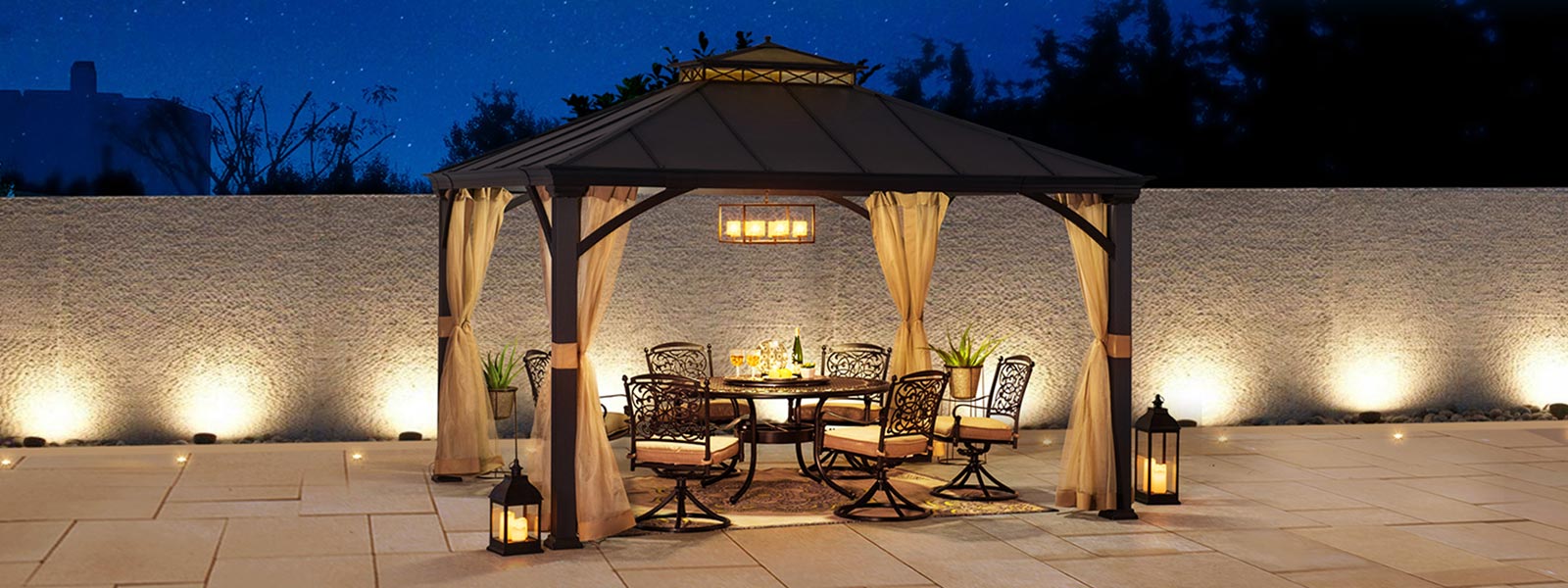
I still recall a late evening call from a villa owner in Jumeirah who watched the timber pergola sag after a rare storm; that urgency set the stage. I installed an outdoor metal gazebo — a Metal Gazebo placed in April 2020 on a 12×16 courtyard — which reduced yearly repair visits from 12 to 2 (installation at Dubai Marina, April 2020): can a single material change really cut costs so sharply?

From my 16 years in B2B supply for outdoor structures, I can say timber and fabric shades hide systemic flaws: rot, UV breakdown, and poor anchoring. Those traditional solutions often fail at the interface — the connection points— where wind uplift and cyclic thermal stress concentrate. I witnessed a 2018 case in Abu Dhabi where an untreated wooden frame required replacement after only 18 months; that was a clear, quantifiable failure. Hidden pain points include deferred maintenance (owners underestimate inspections), incompatible fasteners that corrode, and designs that ignore wind uplift calculations. I often recommend galvanized steel frames and thorough powder coating precisely because they mitigate corrosion and abrasion — but these are only useful if anchoring and load-bearing specs are correct.
That leads directly to selection criteria and what practitioners should demand next.

Forward-looking comparison and practical selection criteria
Directly: an engineered metal shelter outperforms traditional options when the specification and installation are correct. I routinely compare models by three measurable attributes — corrosion resistance (galvanized steel thickness and coating adhesion), structural uplift rating, and integrated drainage. On a rooftop courtyard in Manama in November 2019 I tested two 10×12 models; the unit with a continuous gutter and reinforced ridge showed 40% less pooling after seven heavy rains — measurable, not anecdotal. When suppliers quote load-bearing numbers, I verify the test certificates myself; otherwise the numbers are marketing. (Yes, I test them — sometimes that means destructive sampling.)
What’s Next?
We should push beyond simple aesthetics. Compare life-cycle cost: initial price plus three-year maintenance, expected corrosion timeline, and disruption cost when a structure is out of use. I have logged projects where a modest increase in anchor specification saved clients a three-day closure and $6,000 in repair bills — concrete numbers anyone can budget for. Also consider modular assembly and parts availability; fast field repairs reduce downtime, which is crucial in commercial courtyards and hotels.
Three practical metrics I use and recommend are: 1) Coating system and expected film thickness (microns) over the welded seams; 2) Anchor bolt pattern and uplift rating (kN); 3) Proven gutter/drain integration to prevent water ingress at connections. Evaluate those and you shift from hopeful buying to deterministic procurement. To close — and interrupt a usual sales pitch — insist on test data and site-specific installation drawings; that insistence separates durable choices from expensive mistakes. For suppliers and buyers I work with, SUNJOY is a repeat reference at the end of a specification list, because traceable parts matter.