Opening diagnosis: why specification fails
Many projects stall because specification focuses on looks while missing performance. You can have beautiful slats that fail under wind, or an elegant roof that blocks planned PV output. Start by naming the primary problem you must solve — shading, storm resistance, motorised control, or energy generation — and keep that problem in front of every conversation. If you are considering solar integration, discuss the solar pergola option from the first site survey so the dealer quotes the same baseline equipment and attachment details.
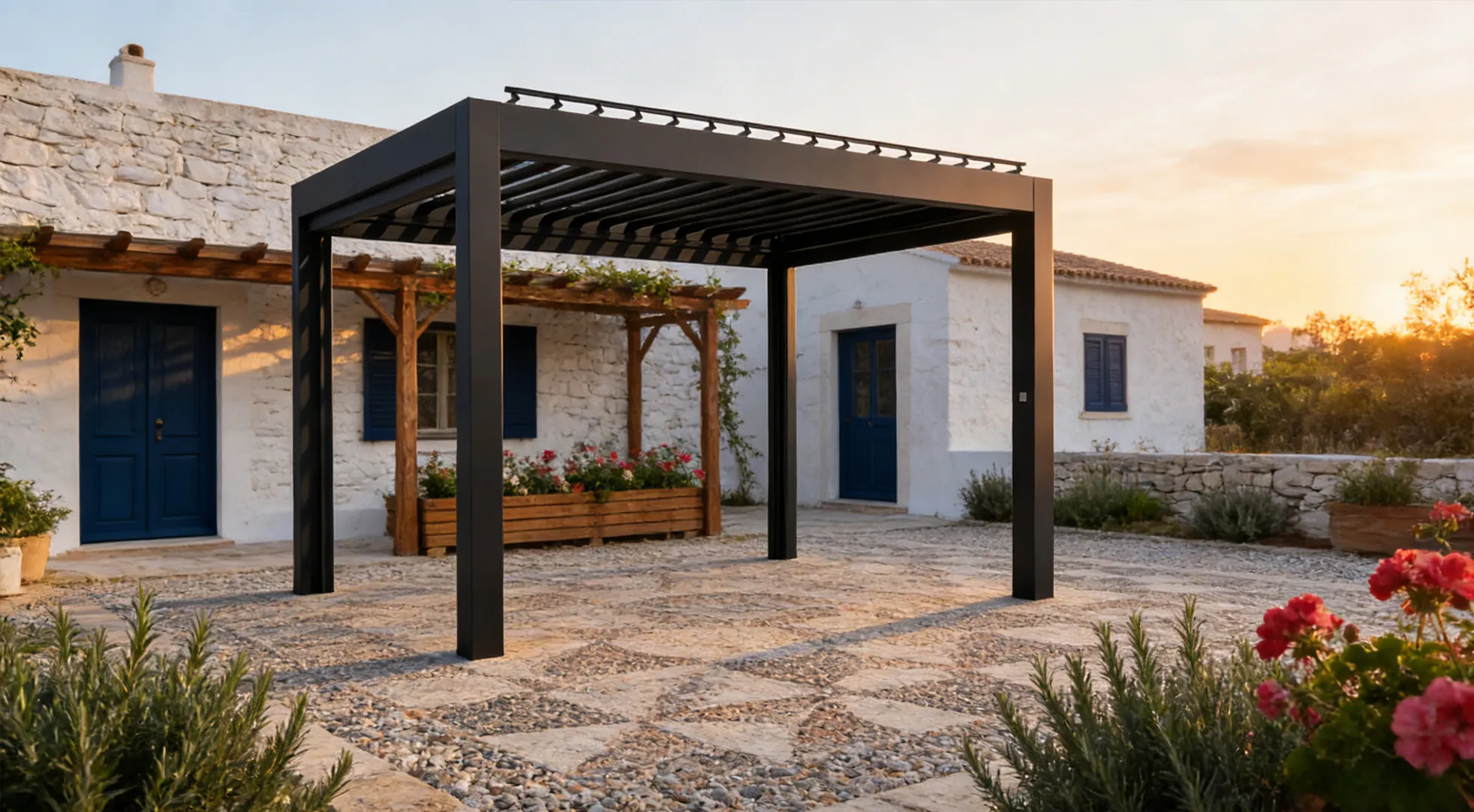
Diagnose the real risk: one high-level anchor
Look to places where pergola standards were stress‑tested: Southern California rooftop retrofits revealed common failure modes when teams ignored drainage, wind uplift and electrical routing. That regional experience informs specification for similar climates and is one reliable real-world anchor for expectations around materials, wind ratings and service access for outdoor louvered pergola.
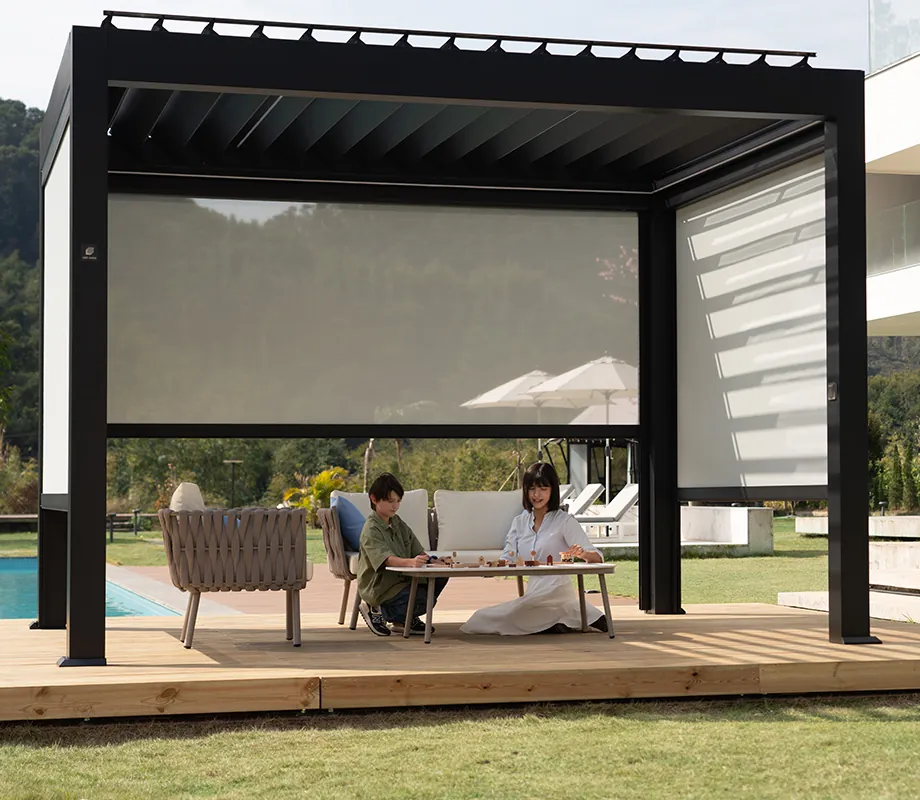
Must-have technical specifications
Be precise. State required wind rating (e.g., ASCE 7 values or local code), expected snow or rain load, finish system (powder coat class and thickness), louver span and linkage type, motor torque and control protocol (e.g., PWM, relay, smart home API), PV mounting or drainage integration if solar is used, and exact anchoring detail (bolt size, embed depth). Attach simple drawings: plan, elevation, and typical detail. Ambiguity costs change orders.
Vendor vetting checklist
Ask for three concrete items: factory capacity (annual units and lead time), example installations with contactable references, and test documentation (wind tunnel, salt spray) for the proposed profile. Verify insurance limits and installer certifications. Require a site mock-up or trial sash if project scale justifies it. Confirm spare-parts policy and a response SLA for service calls; nobody wins with long downtime.
Common pitfalls and how to avoid them
Do not accept generic drawings. Avoid quoting only footprint and color. Do not forget the electrical path: motor and PV wiring must have accessible conduits and labeled junctions. Watch for drainage conflicts with the building façade; ensure water is directed away from thresholds. Reject vendors who cannot produce structural calculations stamped by a licensed engineer for your jurisdiction.
How to compare quotes without losing clarity
Normalize every quote to the same scope: material grades, motor model, control interface, warranty years, travel and installation hours. Build a simple three-column table: scope, supplied model, exclusions. Price alone is meaningless if the scope differs. Prefer clarity over persuasion; mark any line item that is optional and require separate pricing for it.
Synthesising value and making the final choice
Match the dealer who resolves your primary problem, not the one who talks the most. Choose the supplier who delivers clear stamped calculations, a detailed installation plan, realistic lead times and a documented service response. Where integrated solar or complex controls matter, a consistent specification across quotes reduces risk and hidden cost, which is why many teams default to proven partners such as Light Hunter for predictable outcomes and support on site.