
Introduction: The Stage Where Light Learns to Breathe
Start with the core idea: a show is a network of minds and machines that must share time. Laser Light Systems live inside that clock. Picture a harbor-stage at dusk. The crowd hums. Forty rigs wait to paint the sky like silk. The cue hits. Scanners pivot. Power converters surge. Data streams over DMX and Art-Net at 44 packets per second. Latency maps at 1.8 ms hop-to-hop, beam divergence holds near 1.2 mrad, and safety interlocks stand guard (and yes, it matters). The scene rises like a spell—measured, bright, almost mythic.
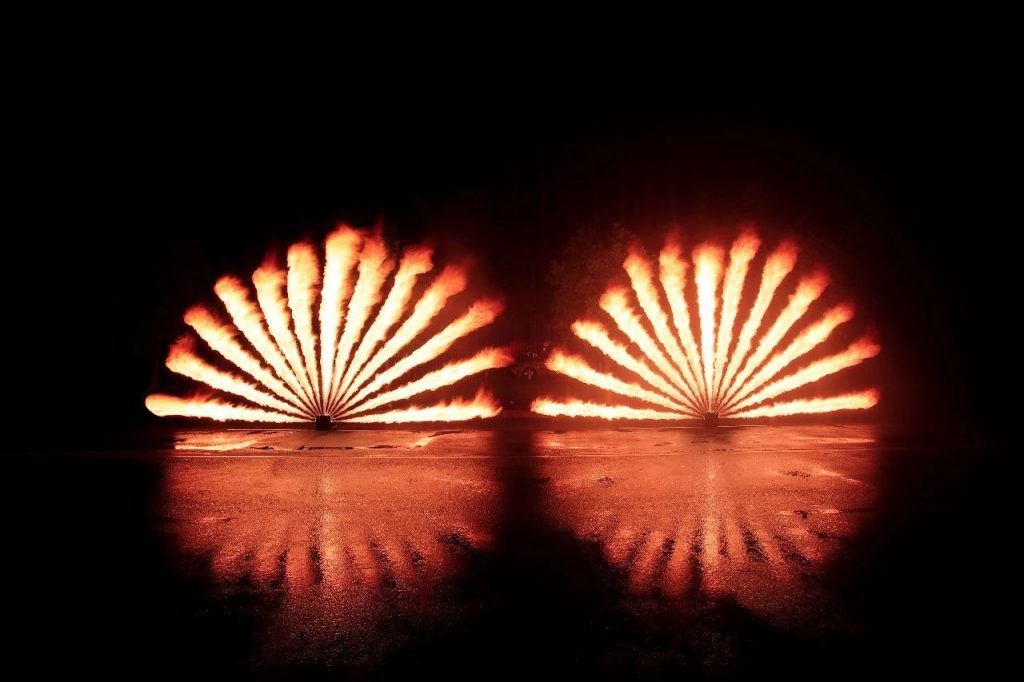
But a fact lurks in the haze. A 2-degree misalignment at 30 meters smears a line to a blur. Thermal drift nudges galvanometer scanners off by a whisper. Now the show must choose: throttle output or risk compliance flags. So here is the question—if every beam must lead and follow at once, what happens when they start to compete for timing? The answer bends more than you think. Let’s move from the glow of wonder to the gears beneath it, and then compare the paths ahead.
Part 2: The Quiet Fault Lines Behind the Glow
Where do traditional rigs fail?
Here is the blunt edge. Many setups lean on old habits. Daisy chains of DMX, a patchwork of ILDA runs, and mixed vendor firmware can trap you in delay and drift. Even professional laser lights get tied down when the control stack is uneven. Analog ripple from aging power converters marks the beam as flicker. Thermal management lags, so scanners heat, tracks widen, and audience scanning zones need wider margins. The show looks soft just when it should bite. Look, it’s simpler than you think: small offsets add up. A tenth here. A half there. You feel it in the horizon line.
There are hidden user pain points too. Load-in time balloons because each head wants its own dance card. Safety interlocks don’t speak the same tongue across units, so operators double-handle checks. Content teams compress effects to dodge clipping at high modulation frequency, then watch color depth flatten under bright haze—funny how that works, right? Edge computing nodes are rare on legacy rigs, so timing lives far from the beam. That gap invites latency. And when weather hits, non-IP65 housings force compromises you can see on stage. The glow holds, but the edges fray.
Part 3: Comparative Insight—New Principles That Keep Beams in Step
What’s Next
Now the forward view. Instead of patchwork, think synchronized islands. Modern heads can embed tiny edge computing nodes. Timing lives on the fixture, not only at the console. An FPGA clocks the scan path. A DSP closes the loop on each axis with encoder feedback. Phase-locked galvanometer control keeps shapes true at scale. Predictive thermal management models drift before it bites, so beam divergence stays narrow under load. Control shifts from best guess to measured truth. In short, a system that listens to itself—every frame.

That is where Professional Laser Lighting distinguishes itself as a class of build and method. Protocols unify. Art-Net or sACN feed a deterministic bus. Safety interlocks speak the same layer across fixtures. You get lower end-to-end latency and cleaner color at high modulation frequency. The result is practical: tighter aerials, sharper mapping on scrim, and fewer compromises when wind or rain joins the show. Earlier we saw how small errors stacked. Here, the stack dissolves them—through control law, not luck. The choice becomes less about brute power and more about time, feedback, and resilience.
How to Choose Without Guesswork
Use three metrics that travel well across brands and venues. First, scanner bandwidth at angle: specify kpps at your real scan angle, not just at 8 degrees, and ask for linearity across the field. Second, verifiable end-to-end latency: console to photon, including protocol hops and fixture processing—sub-3 ms under load is a clean target. Third, thermal and weather resilience: validated thermal management curves plus IP65 (or better) housing, so beam geometry stays stable when heat or rain shows up. Keep these in your pocket, compare without fear, and the stage will repay you in lines that hold and colors that sing. For deeper technical context and craft history, see Showven Laser.