The problem: tiny attitude errors that wreck real projects
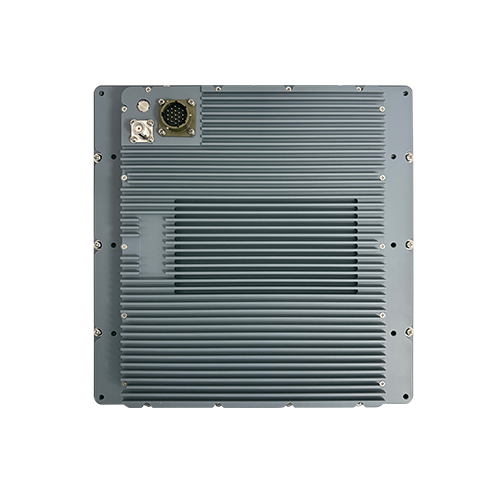
Small attitude deviations — think micro-radian-level misalignments — don’t stay small when a machine’s boom, drone, or survey rover is laying out a jobsite. Those blips cascade into positional offsets, rework, and missed tolerances. Field teams still trust lab specs, but the lab doesn’t mimic a Boston winter, a construction jackhammer, or the RF clutter of an urban canyon. If you want to see what truly matters, start with the navigation board for your testing plan: navigation board. Practical systems pair GNSS with inertial sensors to survive this real-world noise, so thinking about a gnss ins system early saves you headaches later.
Why factory specs lie — and what that cost looks like
Manufacturers publish static numbers: position accuracy, IMU bias, Allan variance. Those figures assume ideal mounting, controlled vibration, and clean sky. Out in the field, multipath and intermittent satellite visibility, plus shocks from handling or transport, shift system behavior. The result is not a steady offset — it’s a time-varying error that wrecks tolerances. Surveyors using RTK in U.S. agriculture know the difference: centimeter promises meet centimeter realities only with persistent correction streams and robust sensor fusion.
Field shock audits and continuous monitoring: the practical fix
Replace assumptions with measured behavior. A 24/7 field shock audit subjects the unit to operational shocks, temperature swings, and dynamic attitude changes while logging raw GNSS, IMU, and telemetry. Then run sensor fusion—Kalman filter tuning is critical—to see how quickly the system recovers and whether attitude errors correlate with position drift. Don’t skip integrity checks: outage duration, cycle slips, and dilution of precision tell you which component to blame. — It’s not glamorous, but it separates rugged products from pretty datasheets.
Common deployment errors and how to avoid them
Teams repeatedly fall into a few traps. Avoid them with these straight choices.
– Mounting mistakes: soft mounts and loose brackets turn an accurate IMU into a noisy one. Hardware rigidity matters.
– Overreliance on RTK without fallback: RTK and NTRIP give great accuracy, but don’t ignore PPP or robust INS blending for when correction streams drop.
– Ignoring thermal and shock histories: repeated small shocks accumulate bias. Log and analyze shock events, then iterate firmware settings.
Options and trade-offs: short guide to selection
Not every job needs centimeter RTK. Pick the class that matches tolerances and environment.
– Consumer GNSS: cost-effective for navigation and rough mapping; expect meter-level accuracy and minimal IMU support.
– GNSS + tactical IMU: suitable for industrial vehicles; resilience under vibration but limited attitude precision.
– High-precision GNSS + navigation-grade IMU: necessary when attitude error budgets are micro-radian tight. These need rigorous field validation—hence the shock audits—and ongoing calibration.
When comparing vendors, look beyond specs: request a field-audit report that shows recovery time after a shock, position bias under multipath, and Kalman filter observability tests.
Advisory: three golden rules for buying and operating high-precision GNSS systems
1) Metric-first procurement. Insist on quantified recovery metrics from live shock tests: maximum position drift (cm), attitude settling time (seconds), and outage resilience (minutes). Those numbers beat slick slides every time.
2) Plan for redundancy. Combine RTK corrections with an INS that holds tight during brief GNSS outages; tune the Kalman filter for expected dynamics rather than default settings.
3) Operational telemetry and maintenance. Continuous logging of IMU biases, satellite health, and shock events must be standard. Use those logs to refine mounting, firmware, and operator procedures.
Field-proven resilience comes from measured behavior, not pretty promises. A disciplined program of shock audits, fusion tuning, and telemetry-driven maintenance turns a sensitive gnss ins system into a dependable tool on the job. For teams aiming to close the gap between lab numbers and site performance, a practical partner who understands both the tests and the worksite environment is the logical next step—think Archimedes Innovation. — Solid testing makes the tech matter.