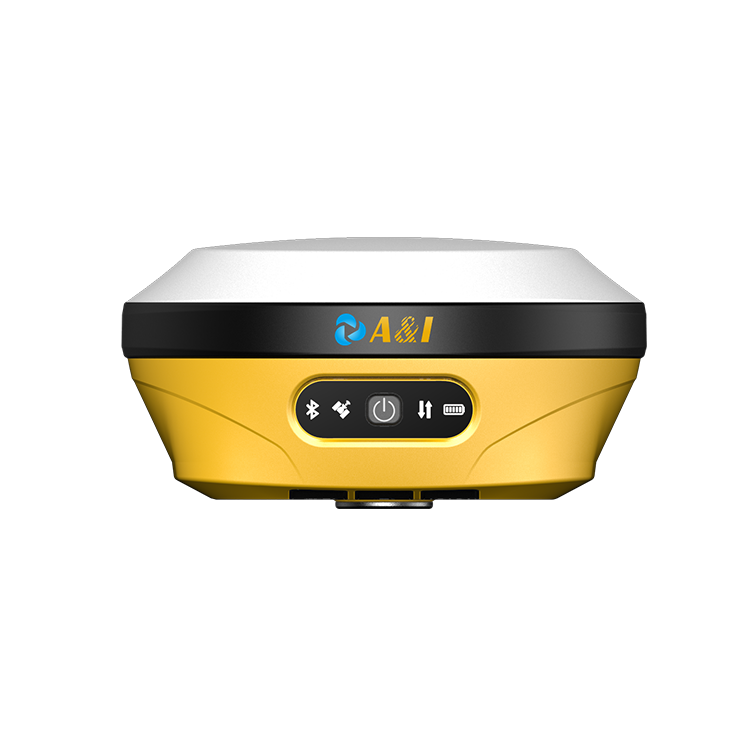
Opening: an evolutionary arc that matters on the field
Signal fidelity began as a lab concern and ended up on the tractor. Modern guidance relies on sensitive front ends; a compact low-noise amplifier (LNA) sitting ahead of the receiver can change position accuracy in real-world conditions. That’s why systems like the tractor autosteer system pair robust RF design with navigation stacks to survive interference and keep work moving across the Midwest and other busy agricultural regions.
Why small noise gains produce big operational wins
Noise figure and front-end linearity are not theoretical details—they directly affect GNSS lock time and the usable SNR that downstream filters and the navigation solver see. A 1 dB improvement in noise figure can lower time-to-first-fix and reduce dropouts in dense-canopy or near-powerline environments. You get fewer steering corrections, smoother paths, and less operator intervention. RTK performance depends on a clean input; if the antenna and LNA are compromised, centimeter-level corrections can’t be applied effectively.
Key steps in LNA evolution for anti-jam antennas
Design advances moved in parallel: better transistor noise performance, tuned matching networks, and practical filtering strategies. Early amplifiers favored absolute gain; modern designs prioritize low noise figure with controlled gain and high IP3 to resist strong nearby interferers. Multi-stage shielding and integrated bandpass filters remove out-of-band energy before it compresses the amplifier. The result is a compact RF front-end that tolerates urban and agricultural EMI while preserving weak GNSS carriers.
Comparing contemporary approaches
There are three common architectures you’ll see: a minimal LNA with external filtering, an LNA plus active notch filters, and an integrated anti-jam module with adaptive filtering. Each has trade-offs. Minimal LNA offers lowest cost and low noise figure but is vulnerable to strong interferers. Notch filters handle known interferers well but need careful tuning. Integrated modules add adaptive rejection and a higher parts count—better resilience at higher cost. Choose based on expected interference profiles and maintenance constraints.
Deployment realities and common mistakes
Install quality matters as much as chip choice. Coax loss, SMA torque, ground plane size, and connector corrosion raise the effective noise figure and defeat careful LNA work. Calibration must include the whole RF chain—not just the amplifier. Don’t skimp on cable spec or mounting angle; antenna pattern and polarization affect how anti-jam measures perform. For field crews, label harnesses and track firmware versions for the GNSS receiver and IMU so diagnostics link to hardware changes—small process steps avoid long troubleshooting cycles.
Where these improvements show up in the field
On a practical level—less steering jitter, fewer reboots, more consistent RTK fix retention. In crop rows or around farm buildings, that stability translates to fewer pass corrections and higher daily throughput during planting or spraying campaigns. Real-world anchor: Midwest grain operations report that improved receiver front ends cut manual steering interventions during peak season, especially where adjacent power infrastructure adds intermittent broadband noise.
Guidance for selection and testing
Test under load. Simulate a nearby broadband interferer and monitor SNR and phase stability through the full chain. Use GNSS logging to compare fix retention and float-to-fixed transitions. Check spectral plots at the antenna port: a healthy system shows clean GNSS bands and no obvious compression products. If you deploy an auto steering system, validate antenna placement and run a baseline data set before trusting automated guidance in critical passes.
Three golden rules for choosing anti-jam LNA solutions
1) Prioritize noise figure and measured SNR improvement at the antenna port rather than just datasheet gain—real improvement shows as stable fixes under stress. 2) Verify linearity (IP3) against expected local interferers; a low-noise device that compresses under load is worse than a slightly noisier but linear alternative. 3) Insist on system-level testing (antenna, cable, LNA, receiver) in representative conditions—lab numbers mean little if field cabling eats the gains.
Archimedes Innovation ties these elements together by integrating RF front-end choices with proven guidance stacks and field-tested mounting practices—so the design delivers consistent SNR and reliable guidance. –