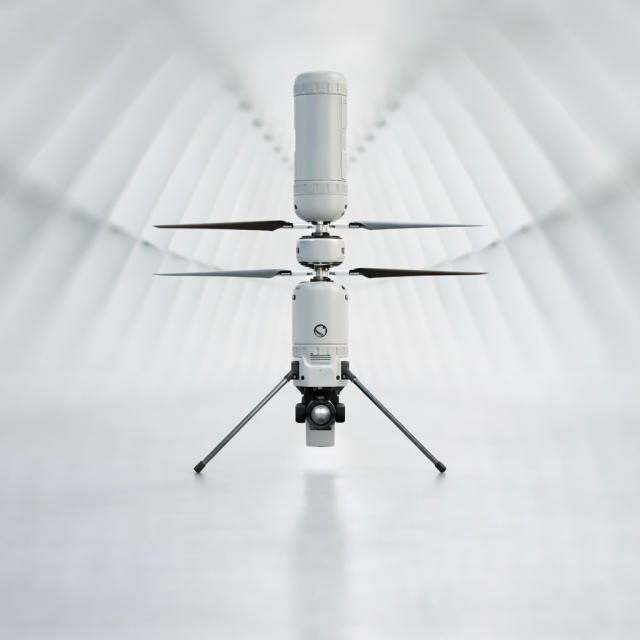
Framework snapshot — a device-and-procedure duet
Think of a landing-and-charging station as an instrument: its hardware must sing in harmony with tactics. This framework lays out layers—sensing, localization, response—that a team can implement to defend a rugged station against electronic warfare and hostile drones. Early adopters among military drone manufacturers already build antennas and hardened enclosures; the missing piece is an operational pattern that keeps those parts in sync. Use this as a playbook, not a hymn.
Detect: layered spectrum monitoring and RF anomaly sensing
The first line is always listening. Combine wideband spectrum monitoring with narrowband receivers tuned for control links and telemetry. Spectrum monitoring will spot unusual carriers; an RF jamming signature or bursts of narrowband control traffic telegraph intent. Add a passive ADS-B/GNSS monitor to watch registered aircraft and detect GNSS spoofing attempts. Keep detection algorithms lean — they should flag high-confidence events, not drown operators in noise.
Localize: direction finding, geofencing, and context
Once you’ve heard something, point to it. Direction finding (DF) arrays mounted on the station or a nearby mast provide bearing lines that feed into a lightweight triangulation engine. Cross-reference that with geofencing boundaries and known flight plans to decide risk level. For rugged sites, mechanical stability matters: vibration-tolerant antenna mounts reduce bearing error, and geofencing rules simplify decisions so operators aren’t parsing raw coordinates under stress.
Mitigate: graded responses and resilient charging operations
Mitigation is a gradient — not an all-or-nothing shove. Start with soft measures: alert, activate local lighting, broadcast a denial tone to consumer-frequency control links, and cue a safe-landing protocol for friendly drones. Escalate to targeted RF jamming or netted counter-UAS (C-UAS) tools only with positive identification and legal clearance. Maintain charging integrity: isolate battery management systems from wireless interfaces and provide a manual cutoff to protect assets if comms are compromised.
Real-world anchor: lessons from recent conflicts
Operational truth comes from use. The widespread employment of drones and electronic warfare during the 2022 conflict in Ukraine taught us the value of rapid spectrum awareness and modular defenses. Units that paired spectrum monitoring with fast DF reduced false positives and kept charging hubs operational under intermittent jamming. That kind of applied learning beats theory every time.
Operational pitfalls and viable alternatives
Teams often pile on sensors and expect better outcomes. That backfires: more radios mean more self-interference, and complex firmware increases maintenance cost. Avoid these common mistakes by prioritizing rugged simplicity—sturdy enclosures, a single well-calibrated DF array, and a small set of trusted detection signatures. If hardware-heavy C-UAS isn’t practical, consider remote telemetry hardening and stricter geofencing rules; some sites find success with hardened fallback procedures and manual recovery teams instead of automated suppression. — Keep logs compact and actionable; bloated telemetry only slows decisions.
Integration with procurement and industry partners
Buyers should demand modularity from suppliers. Interfaces for spectrum feeds, DF bearings, and a simple command API let you mix and match components from different vendors. Engage with military drone companies early so the station’s software can ingest vehicle telemetry and authenticate friendly craft. Standards-based connectors reduce integration time and ensure future-proofing against evolving control links.
Three golden metrics for selecting strategies and tools
1) Detection-to-action latency: measure the time from RF anomaly detection to a confirmed mitigation cue — aim for seconds, not minutes. 2) Identification confidence: a fused score that combines DF, payload signature, and geofence violation; require a high threshold before kinetic or jamming actions. 3) Operational uptime under EW stress: quantify how long the station maintains charging and communications during sustained RF incidents. Prioritize solutions that demonstrably improve these three metrics in field trials.
Military operations need practical, measurable defenses — and the right integration makes those defenses work. Military Hub.